

 By
By A political row emerged after Sinn Féin said it would not attend St Patrick’s Day events at the White House. The party framed the move as a protest linked to global political tensions. Soon after, the US embassy clarified that Sinn Féin had not been invited by the Trump administration.
This exchange sparked debate across Ireland, the United States, and political circles. The issue goes beyond a simple event invite. It touches diplomacy, symbolism, Irish unity politics, and US foreign policy.
This article explains the background, the reactions, and the wider meaning of this dispute.
Why St Patrick’s Day Visits Matter
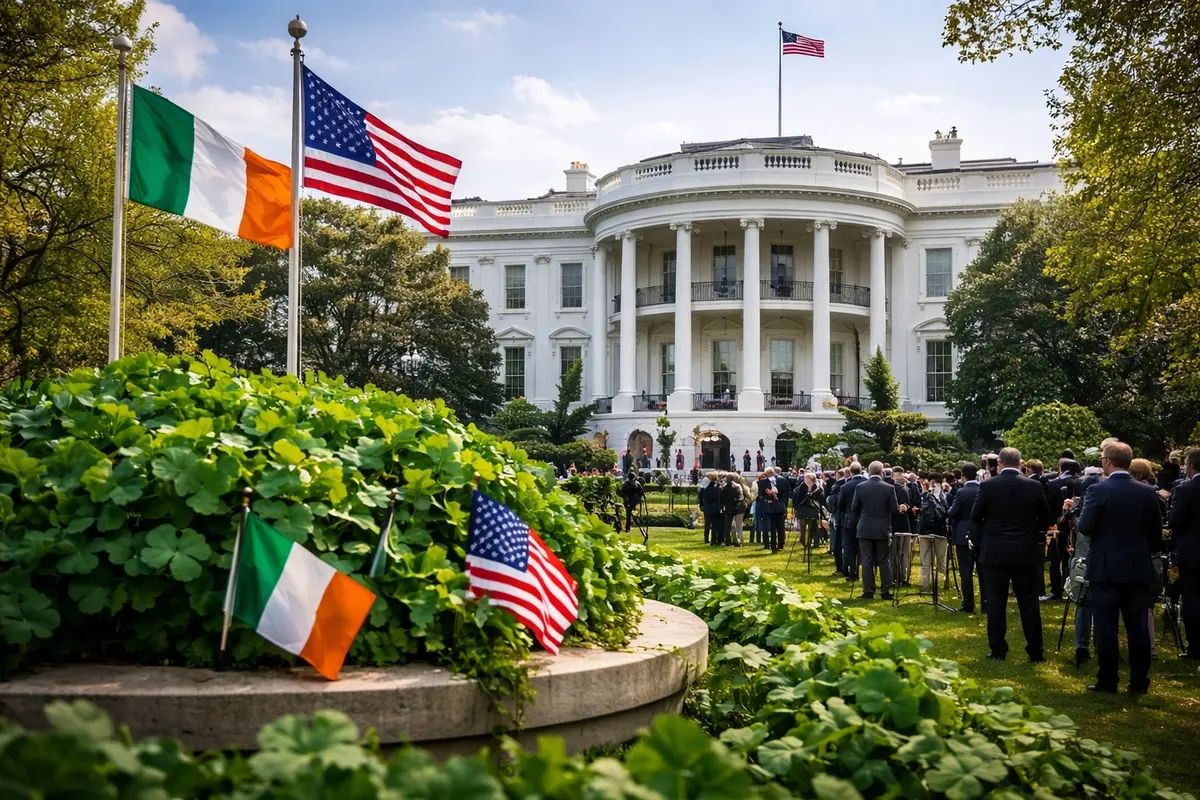
St Patrick’s Day visits to Washington hold deep political value. Irish leaders use the trip to strengthen ties with the United States. Meetings at the White House are seen as signs of goodwill and shared history.
The tradition often includes the presentation of shamrock to the US president. Irish Taoisigh and other leaders attend events across Washington during the week. These visits also create chances for economic talks and diaspora engagement.
Political parties in Northern Ireland have also joined some events in past years. This made the celebration a platform for dialogue and unity messaging.
Sinn Féin’s Announcement
Sinn Féin announced it would boycott the White House St Patrick’s Day events. Party leaders said they were unhappy with political actions linked to the US administration. The boycott was framed as a stand based on principle.
The party argued that attending would send the wrong signal. It stressed that foreign policy decisions can shape symbolic actions. This stance gained media attention across Ireland and Britain.
Soon after the announcement, debate began about whether Sinn Féin had been invited at all.
US Embassy Clarification
The US embassy responded to the controversy with a clear statement. Officials said Sinn Féin had not been invited to White House events. This response shifted the tone of the debate.
Some commentators viewed the embassy’s message as a diplomatic correction. Others saw it as highlighting political tensions between Sinn Féin and the US administration.
The clarification raised new questions. Observers asked whether the boycott was symbolic or pre-emptive. It also sparked discussion about protocol and invitations.
Historical Context: Sinn Féin and US Relations
Sinn Féin’s relationship with the United States has changed over decades. During the peace process, US involvement helped support negotiations. American politicians played roles in encouraging dialogue in Northern Ireland.
Over time, Sinn Féin built connections with Irish-American communities. Party figures often travelled to the US for fundraising and political outreach.
Yet relations have not always been smooth. Political shifts in Washington and differences on global issues have created tension at times.
Trump Administration and Irish Politics
The Trump administration’s approach to foreign policy has been divisive. Issues such as immigration, trade, and Middle East policy influenced global reactions. Irish parties have also responded differently to these positions.
Some leaders maintained diplomatic engagement despite disagreements. Others took stronger symbolic stances to express political values.
In this context, Sinn Féin’s boycott statement fits a wider pattern of political signalling. It reflects how domestic parties respond to global politics.
Reactions in Ireland
The controversy sparked mixed reactions in Ireland. Supporters of Sinn Féin praised the stance as principled. They argued that political events should reflect values as well as tradition.
Critics viewed the move as political theatre. They suggested that diplomacy requires engagement even during disagreement.
Government figures focused on maintaining positive US relations. For them, St Patrick’s Day visits remain key diplomatic tools.
Media coverage highlighted the contrast between symbolic protest and diplomatic protocol.
Northern Ireland Dimension
Sinn Féin’s role in Northern Ireland adds another layer to the debate. As a major political party, it balances regional and international messaging. Decisions about events abroad can affect domestic perception.
Unionist parties often emphasise strong ties with the United Kingdom and the United States. Nationalist parties may use international platforms to highlight Irish unity goals.
The White House controversy reflects these differing priorities. It also shows how global politics intersects with local identity.
Diplomacy vs Symbolism
The dispute highlights a classic political tension. Diplomacy often requires engagement, while symbolism can express values. Parties must decide which approach best serves their goals.
Attending White House events can strengthen ties and open dialogue. Boycotting can signal disagreement and draw public attention.
Sinn Féin’s stance sits at this intersection. Whether invited or not, the debate itself generated political visibility.
Media Coverage and Public Debate
Irish and British media quickly covered the story. Headlines focused on the boycott claim and embassy response. Social media discussions added further debate.
Some users questioned the importance of ceremonial events. Others stressed their symbolic power in diplomacy.
Public reactions also reflected broader political divides. Supporters and critics interpreted the events through partisan lenses.
The Role of the Irish Diaspora
The Irish diaspora in the United States plays a key role in St Patrick’s Day diplomacy. Irish-American groups often host events and meetings with political leaders. These gatherings help maintain cultural and economic ties.
Sinn Féin has historically engaged with diaspora supporters. Decisions about US visits can affect these relationships. The current controversy may influence diaspora perception and engagement.
Diplomatic Protocol and Invitations
White House event invitations follow diplomatic protocol. Governments and key political leaders are usually included. Party representatives may attend depending on political context and relations.
The embassy’s statement suggests that invitations can vary year to year. Political relations and event focus often shape guest lists.
This reality complicates public messaging around boycotts and attendance decisions.
Broader Political Implications
The row may affect perceptions of Sinn Féin’s foreign policy stance. Supporters may view it as principled independence. Critics may argue it risks isolating the party from diplomatic spaces.
For US officials, the incident highlights sensitivities in Irish politics. Managing relations with both Irish and Northern Irish parties requires careful balance.
The controversy also reflects how symbolic events can become political flashpoints.
The Future of St Patrick’s Day Diplomacy
Despite this dispute, St Patrick’s Day visits will likely remain central to Irish-US relations. The tradition has survived political changes and leadership shifts. Economic and cultural ties continue to drive engagement.
Future administrations may adjust guest lists or formats. Yet the core purpose of strengthening ties is expected to remain.
For political parties, the challenge is balancing symbolic actions with long-term diplomacy.
Lessons From the Controversy
This episode offers several insights. Symbolic actions can create strong headlines and public debate. Diplomatic protocol can shape narratives in unexpected ways.
It also shows the importance of clear communication. Statements from political parties and embassies can quickly influence perception.
Finally, the controversy highlights the complex nature of modern politics. Domestic parties now operate in a global media environment.