 By
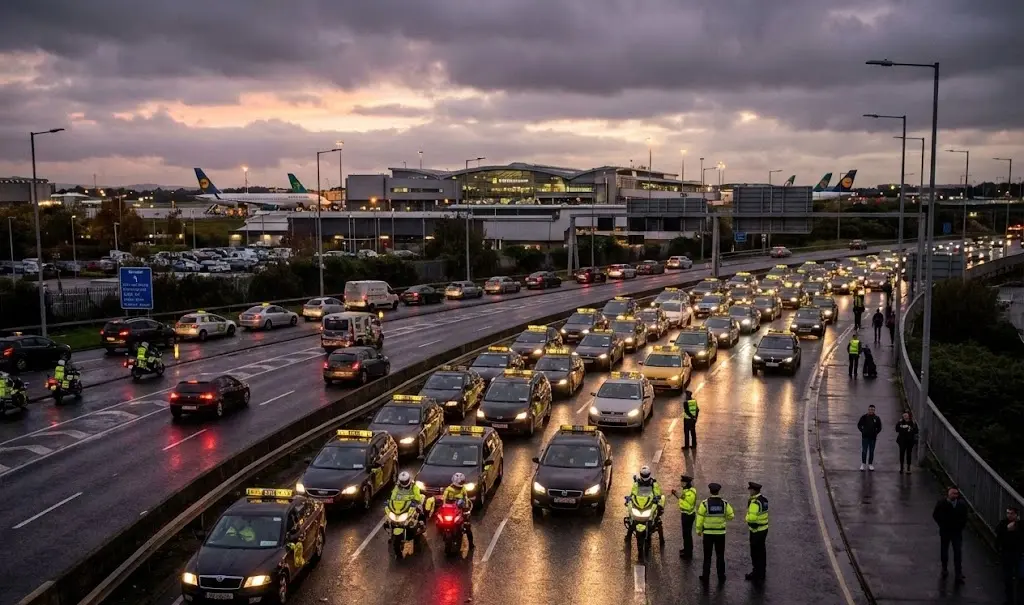
By Dublin Airport has issued a major travel advisory after a large-scale protest by taxi drivers brought significant traffic disruption to routes surrounding the airport and key roads across the city. The demonstration, which began around 4:30 pm, has triggered delays for both motorists and passengers heading to Ireland’s busiest international airport. Gardaí, who had issued an early warning on Wednesday afternoon, have urged drivers to avoid the affected areas where possible.
The protest marks the second major demonstration by taxi drivers in recent weeks. Their actions come in response to growing discontent over Uber’s new fixed pricing plan, which drivers argue threatens their earnings, autonomy, and long-standing operating structure. As pressure builds, taxi drivers are calling on the Minister for Transport and the National Transport Authority (NTA) to intervene and halt the implementation of the system.
In this comprehensive article, we explore the details of the protest, the routes affected, the causes behind the taxi drivers’ frustration, and what passengers need to know. This report is optimized for search engines, providing extensive context and updates on one of Ireland’s most-discussed news stories today.
What Triggered the Traffic Delays?
Dublin Airport and Gardaí issued near-simultaneous warnings to the public after receiving notice of a “go slow” protest staged by taxi drivers. Such demonstrations intentionally reduce traffic flow to a crawl, forcing widespread congestion on key travel corridors.
The event began shortly after 4:30 pm, aligning with rush hour — the time of day when road usage is already at its peak. This strategic timing amplified the visibility and impact of the protest, ensuring that the taxi drivers’ grievances received maximum nationwide attention.
Authorities confirmed that the demonstration involved multiple convoys of taxis departing from various points around the city, converging on Dublin’s central arteries and ultimately impacting the airport approach roads.
Key Routes Affected by the Taxi Protest
Gardaí reported that several major Dublin routes were expected to experience significant slow-downs. These include:
1. Conyngham Road to Merrion Square
This central city route, which passes close to landmarks like the Phoenix Park and Government Buildings, saw heavy build-ups. Taxi drivers used this corridor to maximize visibility of their protest in the heart of the capital.
2. UCD to Merrion Square
The route from University College Dublin into the city centre became another focal point. The addition of convoys from UCD meant the protest stretched across a wider geographic radius, impacting southside commuters in particular.
3. Northwood, Santry
Northwood — located within minutes of Dublin Airport — experienced severe congestion. This area connects directly to key airport access routes, and traffic from this point significantly affects travel times for passengers.
4. Estuary Road to Dublin Airport
One of the most important access points for airport-bound traffic, this route quickly became gridlocked due to the concentrated presence of taxi convoys. Queues formed long before drivers reached the airport’s perimeter roads.
5. Dublin Airport Campus Roads
While motorway access remained open, the roads within and immediately surrounding the airport began experiencing delays, particularly around Terminals 1 and 2 and the short-term car parks.
These disruptions created a knock-on effect for public transport services, private vehicles, and taxis servicing airport passengers.
Dublin Airport’s Official Warning to Passengers
Dublin Airport issued strong advice urging passengers to allow extra travel time ahead of their flights. Their message emphasized the unpredictable nature of the delays and highlighted the risk of missing flights due to extended transit times.
Recommendations included:
-
Arriving at least 2 to 3 hours early, depending on the flight type.
-
Considering alternative routes, including:
-
M50 diversion options
-
Using Dublin Bus routes unaffected by the protest
-
Airport shuttle services where possible
-
Avoiding the city centre unless absolutely necessary
-
-
Using live traffic updates via Google Maps, AA Roadwatch, Transport for Ireland, or Dublin Airport’s official channels.
Airport officials stressed that while they were monitoring the situation, they had limited ability to control road-level disruption caused by the external protest.
Why Are Taxi Drivers Protesting?
The central issue fueling the protest is Uber’s introduction of a fixed pricing model in Dublin. Under this new system, Uber sets fares in advance, which drivers argue may reduce their income, undermine fare flexibility, and potentially limit control over pricing during periods of high demand.
Although Dublin’s taxi industry is already highly regulated, with standardized metered fares set by the NTA, Uber’s system adds another layer of concern for local drivers.
Taxi Drivers’ Key Concerns Include:
1. Loss of Autonomy
Drivers fear the fixed price model limits their independence in choosing the most profitable jobs and responding to real-time market conditions.
2. Potential for Reduced Earnings
Fixed fares may undervalue longer or more complex routes, especially during peak hours or under heavy traffic conditions.
3. Unequal Balance of Power
Many drivers argue that Uber’s pricing model forces them into a system they do not fully control, with limited ability to negotiate or appeal fare structures.
4. Need for Regulator Intervention
Drivers insist the NTA and the Minister for Transport must step in to prevent global tech companies from imposing unilateral changes on the Irish taxi sector.
5. Concern Over Precedent
There is fear that if Uber successfully rolls out fixed pricing, other ride-hailing platforms may follow suit.
This protest is therefore not just about pricing — it is viewed as a fight for long-term sustainability of traditional taxi driving in the city.
A Growing Movement: The Second Demonstration in Recent Weeks
This protest marks the second organized action by taxi drivers pushing back against Uber’s fixed pricing model. The repeated demonstrations show that industry dissatisfaction is intensifying rather than fading.
The first protest earlier in the month drew strong media attention, but drivers say the response from policymakers has been insufficient. As a result, they returned to Dublin’s roads to escalate pressure.
Taxi unions and independent driver groups indicate that the momentum may continue unless formal negotiations begin.
Government Response So Far
As of the latest reports, Uber has defended its fixed pricing model, claiming it benefits both passengers and drivers by creating more transparency and reducing disputes. However, drivers argue transparency should not come at the expense of fair compensation.
NTA Position
The National Transport Authority has acknowledged the concerns but has not yet announced any major changes to the regulation of apps operating in Dublin.
Minister for Transport
Drivers are specifically calling on the Minister to step in and freeze the implementation of the fixed price system until proper consultation takes place.
To date, no direct intervention has been implemented, though discussions are expected to intensify following this most recent demonstration.
Impact on Travellers and Commuters
The combination of peak-hour traffic and protest activity left many commuters struggling to reach their destinations — especially those heading to the airport for evening flights. Passengers arriving via coach services also experienced slower journey times.
Common Issues Reported by Travellers:
-
Delays of 30 to 60 minutes beyond normal travel time.
-
Long queues on approach roads near Terminals 1 and 2.
-
Cancellations or delays on taxi-booked journeys due to drivers participating in the protest.
-
Increased pressure on bus services, which saw higher-than-usual passenger numbers.
Passengers welcomed the airport’s early warning, but some expressed frustration over the timing of the protest, highlighting the stress it created for travelers trying to make international flights.
What Passengers Should Do During Future Protests
With the likelihood of additional demonstrations growing, passengers may wish to adopt precautionary travel strategies.
1. Leave Early
Arrive 30–60 minutes earlier than usual, especially during peak travel periods.
2. Plan Multiple Route Options
Check real-time traffic apps and consider:
-
The M50
-
Alternative city bypass routes
-
Parking in outlying areas with shuttle transfers
3. Use Public Transport Where Possible
Dublin Bus, Aircoach, Go Ahead, and the 747/757 services can sometimes bypass affected roads more effectively than cars.
4. Pre-Book Airport Services
If available, reserve bus seats or shuttle spaces to guarantee access.
5. Check Airline Guidance
Some carriers provide additional support or flexible rebooking options during major disruptions.
Taxi Drivers’ Message to the Public
Despite the inconvenience caused, many taxi drivers have emphasized that the protests aim to protect their livelihoods and the integrity of the taxi profession. They argue that without intervention now, future changes from tech platforms could lead to further erosion of driver rights and income stability.
Drivers have also reiterated that the protests are targeted at Uber’s policy — not at passengers, who they continue to serve outside demonstration hours.
What Happens Next?
As tensions escalate between drivers and Uber, and as the government comes under pressure to regulate the evolving app-based taxi landscape, several possible next steps include:
Further Demonstrations
If no agreement is reached, drivers may organize additional protests, potentially expanding to larger convoys or longer disruptions.
Government Mediation
The NTA or Transport Minister may call for consultations or propose regulatory amendments.
Uber Policy Review
Uber could consider adjusting or delaying its fixed pricing rollout to address concerns, though no signals of this have yet emerged.
Industry-Wide Impact
Other taxi apps such as Free Now and Bolt may monitor the situation closely, as policy changes could ripple across the entire Irish taxi ecosystem.
Conclusion
The traffic delays around Dublin Airport today highlight a critical moment for Ireland’s taxi industry. As drivers protest Uber’s fixed pricing model, passengers are caught in the crossfire of a broader debate over worker rights, fair pay, and regulation in the digital era.
Dublin Airport’s warning underscores the importance of advance planning, especially during peak travel seasons. Meanwhile, the taxi drivers’ continued demonstrations signal that this issue is far from resolved.
With growing public conversation and a rising call for government intervention, the dispute represents not just a traffic inconvenience but a significant turning point in the future of Dublin’s transportation landscape. The coming days will determine whether policymakers step in — or whether drivers will take to the streets once again.