 By
By British politics has entered another major turning point.
Sir Keir Starmer has announced that he will step down as leader of the Labour Party and resign as prime minister once a successor is chosen. His decision comes after months of pressure from within Labour, disappointing election results, and growing concerns about the party’s future direction.
The announcement has triggered a leadership contest that could reshape British politics ahead of the next general election. Labour now faces the task of choosing a new leader while remaining in government.
Starmer said he would stay on as prime minister until the contest is complete and promised a smooth transfer of power. The Labour Party plans to open nominations on July 9, with a new leader expected before Parliament returns in September.
This article explains why Starmer resigned, who could replace him, what happens next, and what it means for the United Kingdom.
Who Is Keir Starmer?
Keir Starmer became leader of the Labour Party in April 2020 after the party’s defeat in the 2019 general election. He spent years rebuilding Labour’s image and moving the party toward the political center.
In July 2024, Starmer led Labour to a landslide victory, ending fourteen years of Conservative rule. He became prime minister on July 5, 2024.
His government focused on:
- Economic growth
- NHS reforms
- Workers’ rights
- Education improvements
- Infrastructure projects
- Energy security
- Crime reduction
Starmer argued that his government helped make Britain stronger and fairer. During his resignation speech, he defended his record and said Labour had changed significantly under his leadership.
Why Did Keir Starmer Resign?
The resignation did not happen overnight.
Pressure had been building for months.
Labour suffered poor performances in local elections across England, Wales, and Scotland. Public approval ratings also declined. Many MPs feared Labour could lose support before the next general election.
Several issues contributed to the growing unrest:
1. Local Election Losses
Labour experienced disappointing results during local elections. Opposition parties made gains while Labour lost ground in several areas. These results increased calls for leadership change.
2. Internal Party Pressure
More Labour MPs began questioning whether Starmer was the right person to lead the party into the next election. The pressure intensified after the Makerfield by-election.
3. Policy U-Turns
Critics within Labour argued that several major policy reversals weakened confidence in the government’s direction. Some MPs felt voters no longer understood what Labour stood for.
4. Leadership Controversies
Questions were raised about decisions made in Downing Street, including key appointments that later became politically damaging. These controversies added to existing frustrations.
5. Rising Opposition Threats
Parties such as Reform UK increased their support in polls and elections. Labour MPs worried that a divided party would struggle to stop further losses.
Facing these challenges, Starmer accepted that many within his party wanted new leadership and decided to step aside.
Starmer’s Emotional Resignation Speech
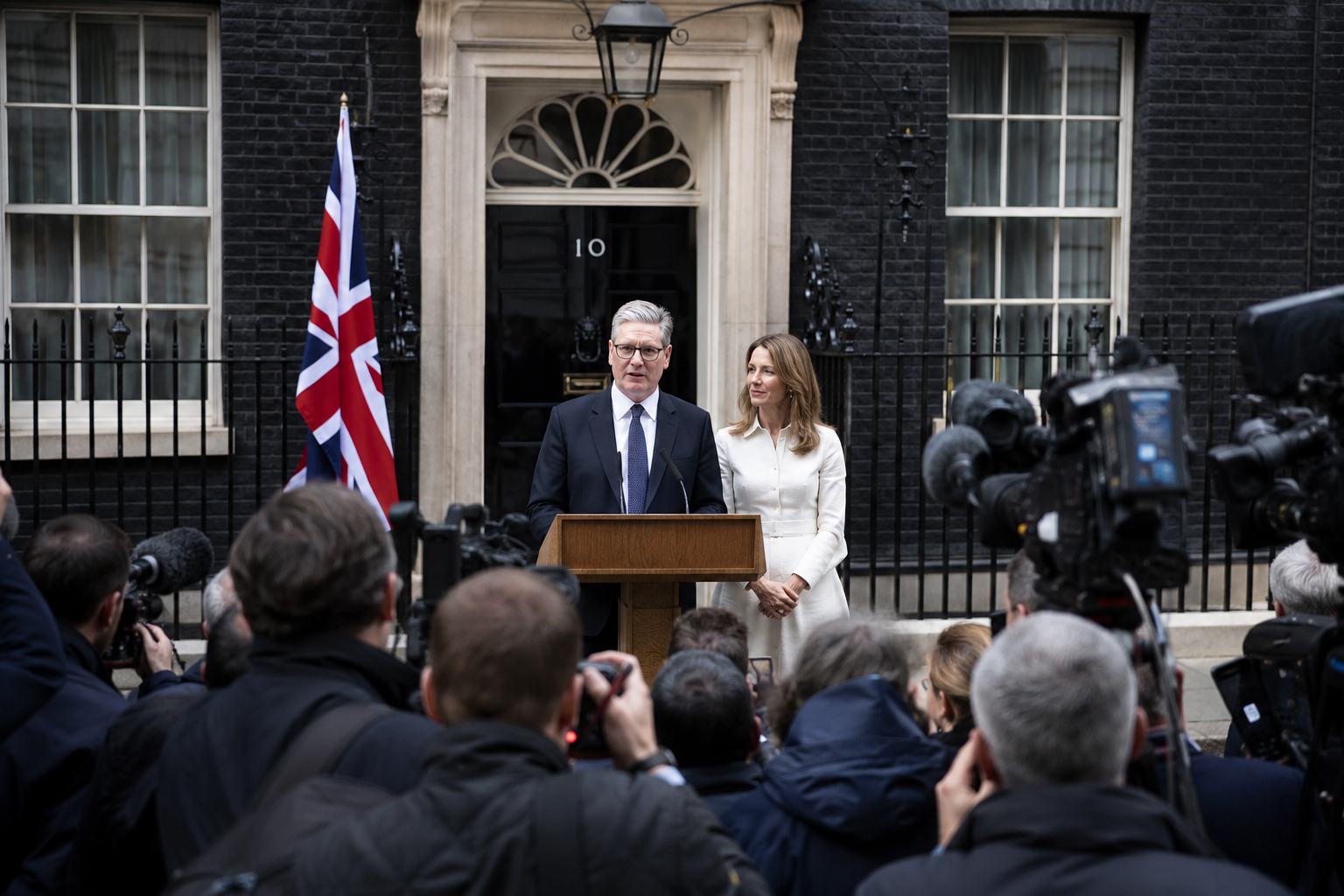
Standing outside Number 10 Downing Street, Starmer delivered an emotional farewell.
He thanked his supporters, government staff, and colleagues. He also paid tribute to his wife Victoria and their children. Reports noted that his voice cracked with emotion as he discussed family life and his future plans.
Starmer said:
- He accepted the view of his parliamentary party.
- Britain was stronger than when he took office.
- He would support his successor fully.
- He wanted an orderly transition.
- Family would become his main focus after leaving office.
He also stressed that Labour’s work of change should continue under new leadership.
Leadership Contest Timeline
Labour’s governing body will oversee the leadership race.
The current timetable is clear.
| Event | Date | Importance |
|---|---|---|
| Starmer announces resignation | June 2026 | Starts leadership transition |
| Leadership nominations open | July 9, 2026 | Candidates officially enter race |
| Nominations close | July 16, 2026 | Final candidate list confirmed |
| Campaign period | Summer 2026 | Members vote for leader |
| New leader expected | Before September 2026 | New PM takes office |
Sources indicate Labour wants a replacement in place before Parliament returns after the summer break.
Who Could Become Britain’s Next Prime Minister?
Several names have emerged.
Andy Burnham
Andy Burnham is widely viewed as the leading candidate.
Burnham recently returned to Parliament after a strong by-election victory. His win increased pressure on Starmer and boosted calls for fresh leadership. Many Labour members see him as the favorite.
Reasons Burnham is considered the frontrunner:
- Strong public profile
- Experience as Greater Manchester Mayor
- Recent election success
- Support from senior Labour figures
His return to Westminster has changed the political landscape.
Wes Streeting
Wes Streeting had previously expressed interest in a leadership bid.
However, reports suggest he has backed Burnham and may not run himself. This could strengthen Burnham’s path to victory.
Other Potential Candidates
Other Labour figures could still enter the race if they secure enough support.
Possible names discussed in political circles include:
- Angela Rayner
- David Lammy
- Ed Miliband
- Al Carns
The final list will become clear once nominations open.
Will Britain Have a General Election?
This is one of the most common questions being asked.
The answer is no.
A general election is not automatically required when a prime minister resigns.
Labour still holds a majority in Parliament. The party can choose a new leader, and that person can become prime minister without a national vote.
Opposition leaders have demanded a general election.
Conservative Response
Kemi Badenoch criticized Starmer’s record and argued Labour’s problems go beyond one leader.
Liberal Democrat Response
Ed Davey said the public is tired of constant leadership changes and wants meaningful reform.
Reform UK Response
Nigel Farage called for a general election and argued voters should choose the next government directly.
Despite these demands, Labour can legally choose a new leader without holding a national election.
Impact on the Labour Party
Labour now faces one of its biggest tests since returning to power.
The party must:
- Avoid internal divisions
- Maintain public confidence
- Present a clear vision
- Unite around a new leader
- Prepare for future elections
A smooth leadership transition could help Labour recover.
A bitter contest could create more problems and strengthen opposition parties. Political analysts believe the coming weeks will be critical for Labour’s future.
Impact on the UK Economy
Political change often affects financial markets.
Following Starmer’s announcement:
- The British pound weakened slightly.
- Government bond yields moved higher.
- Investors began assessing possible policy changes.
Analysts are watching the leadership race closely. Market reaction may depend on who wins and what economic policies they support.
Businesses are seeking answers on:
- Tax policy
- Public spending
- Economic growth plans
- Trade strategy
- Investment priorities
The next Labour leader will likely face immediate pressure to reassure markets and voters.
Why This Matters Globally
The United Kingdom remains one of the world’s largest economies and an important international partner.
A change in leadership can influence:
- Foreign policy
- Trade agreements
- NATO cooperation
- European relations
- Global investment decisions
Governments and investors around the world will watch the Labour leadership contest closely.
How History May Judge Starmer
Starmer’s legacy remains debated.
Supporters argue he:
- Rebuilt Labour after difficult years.
- Led the party back to government.
- Won a major election victory.
- Advanced reforms in several areas.
Critics argue he:
- Lost public trust too quickly.
- Failed to maintain party unity.
- Struggled with political messaging.
- Allowed controversies to overshadow achievements.
Regardless of opinion, Starmer’s leadership changed British politics. He took Labour from opposition to power and leaves office as one of the most significant Labour leaders of recent years.
What Happens Next?
The coming weeks will shape Britain’s political future.
Key events to watch include:
- Opening of Labour nominations on July 9.
- Official candidate announcements.
- Party debates and campaigning.
- Voting by Labour members.
- Selection of the new leader.
- Appointment of Britain’s next prime minister.
If Andy Burnham secures enough support, he could become the clear favorite early in the race. However, British politics often produces surprises, and other candidates may still emerge.
Conclusion
Keir Starmer’s resignation marks another major chapter in modern British politics.
Less than two years after leading Labour to a historic election victory, he has chosen to step aside amid growing pressure from within his own party. His departure opens the door to a leadership battle that will decide not only Labour’s future but also the identity of Britain’s next prime minister.
For now, Starmer remains in office while Labour organizes its leadership contest. The race is expected to move quickly, with a new leader likely in place before Parliament returns in September.
The outcome could shape British politics for years to come. All eyes are now on Labour, its candidates, and the person who will soon walk through the doors of Number 10 as the next prime minister of the United Kingdom.