 By
By Families across Ireland are preparing for beach trips as school holidays begin and warmer weather arrives. Many people plan to visit coastal areas to enjoy the sun and cool sea water. However, safety officials have issued an important warning after a dangerous sea creature was spotted on Irish beaches.
Lifeguards recently reported sightings of the Portuguese Man-of-War near Ardmore Beach in County Waterford. Following these reports, local authorities raised warning flags and advised visitors to avoid entering affected waters.
The Portuguese Man-of-War is often mistaken for a jellyfish. While it looks similar, it is actually a different type of marine animal. Its long tentacles contain venom that can cause severe pain and serious injuries.
This warning comes as Ireland prepares for warmer temperatures and increased beach activity. Parents, swimmers, surfers, and beach walkers are being urged to learn how to identify this creature and understand the risks it presents.
In this guide, we explain what the Portuguese Man-of-War is, why it is dangerous, how to spot it, what to do if stung, and why these creatures are appearing more often around Irish and UK coastlines.
What Is the Portuguese Man-of-War?
The Portuguese Man-of-War is a marine animal that lives on the ocean surface. Many people call it a jellyfish, but it is not a true jellyfish.
It belongs to a group of animals known as siphonophores. Unlike most sea creatures, a Portuguese Man-of-War is made up of many small organisms called zooids. Each zooid performs a different task. Some handle feeding, others reproduction, and others defense.
These small creatures work together as a single living unit. They cannot survive on their own.
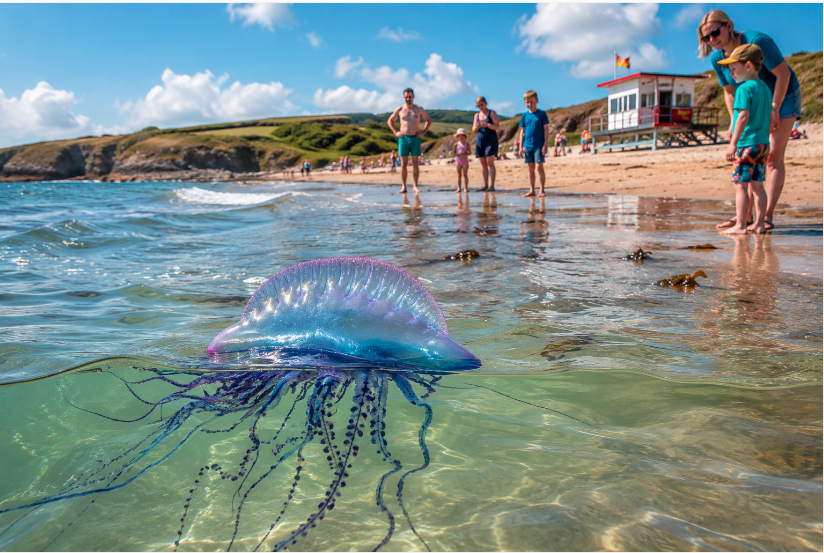
The most visible part of the Portuguese Man-of-War is its gas-filled float. This float sits above the water and often appears blue, purple, or pink. It acts like a sail and allows wind currents to move the animal across the sea.
Because it cannot swim, it depends entirely on winds and ocean currents for movement.
Why Is It Dangerous?
The danger comes from its tentacles.
These tentacles contain thousands of tiny stinging cells. Each cell can inject venom into prey or anything that touches it.
The venom helps the creature catch fish and small marine animals. The sting can also affect humans.
A Portuguese Man-of-War sting can cause:
- Severe burning pain
- Red welts on the skin
- Swelling
- Muscle pain
- Nausea
- Headaches
- Breathing problems in rare cases
- Allergic reactions
Most healthy adults recover without serious complications. However, children, older adults, and people with allergies may face greater risks.
Medical attention may be needed if symptoms become severe.
Recent Sightings on Irish Beaches
Lifeguards recently spotted Portuguese Man-of-War near Ardmore Beach in Waterford.
The sighting prompted immediate action from local authorities. Warning notices were issued and beach users were advised to stay out of affected areas.
The warning comes at a busy time for coastal communities. Thousands of families are expected to visit beaches during the school holiday period.
Safety officials want visitors to remain alert and avoid touching any unfamiliar sea creatures found on beaches.
Even a stranded Portuguese Man-of-War can still sting.
How to Identify a Portuguese Man-of-War
Knowing what to look for can help prevent injuries.
The creature has a distinctive appearance.
Key Features
- Blue or purple floating bladder
- Transparent or slightly pink appearance
- Long blue-violet tentacles
- Sail-like structure above water
- Often found floating on the ocean surface
The floating bladder usually measures several inches in length. However, the tentacles can stretch much farther.
Many people see only the float and do not realize dangerous tentacles may extend below the surface.
Portuguese Man-of-War Quick Facts
| Feature | Details |
|---|---|
| Common Name | Portuguese Man-of-War |
| Scientific Group | Siphonophore |
| True Jellyfish? | No |
| Main Color | Blue, Purple, Pink |
| Habitat | Tropical and subtropical oceans |
| Movement | Driven by wind and currents |
| Tentacle Length | Up to 30 metres |
| Sting Severity | Painful and potentially serious |
| Found in Ireland? | Yes, occasional sightings |
| Safe to Touch? | No |
Why Are They Appearing in Ireland?
The Portuguese Man-of-War is normally found in warmer oceans.
It is most common in tropical and subtropical waters. These include areas of the Atlantic Ocean, Caribbean Sea, Gulf of Mexico, and parts of the Pacific Ocean.
Experts believe several factors may explain their appearance near Ireland.
Strong Winds
The creature cannot swim. Winds push it across large distances.
Storm systems and strong ocean winds can carry Portuguese Man-of-War far from their normal habitat.
Ocean Currents
Atlantic currents can transport these creatures northward.
Changing current patterns may increase sightings in regions where they were once rare.
Warmer Sea Temperatures
Rising ocean temperatures may help support their survival in northern waters.
Scientists have observed more sightings along Irish and UK coastlines in recent years.
While one sighting does not prove a long-term trend, warmer seas may contribute to increased appearances.
Can They Sting After Death?
Yes.
This is one of the most important facts people should know.
Many beach visitors assume a stranded or dead sea creature is harmless.
That is not true for the Portuguese Man-of-War.
Its tentacles can continue delivering painful stings long after the animal dies.
Even dried tentacles may remain dangerous.
Children are often tempted to pick up unusual objects found on beaches. Parents should warn them never to touch these creatures.
If you see one, stay away and alert lifeguards if possible.
What Does a Sting Feel Like?
People describe the pain as sudden and intense.
The sting often feels like a sharp whip striking the skin.
Symptoms may include:
- Immediate burning pain
- Raised red marks
- Swelling
- Itching
- Skin irritation
- Muscle cramps
- Fatigue
In severe cases, victims may experience:
- Chest pain
- Difficulty breathing
- Dizziness
- Rapid heartbeat
Seek emergency care if serious symptoms develop.
What Should You Do If Stung?
Quick action can help reduce pain.
Step 1: Leave the Water
Exit the water carefully.
Remaining in the sea increases the chance of further contact with tentacles.
Step 2: Do Not Rub the Area
Rubbing can activate additional stinging cells.
This may worsen the injury.
Step 3: Remove Visible Tentacles Carefully
Use tweezers or gloves if available.
Avoid touching tentacles with bare hands.
Step 4: Rinse With Seawater
Use seawater rather than fresh water.
Fresh water may trigger additional venom release.
Step 5: Seek Medical Help if Needed
Get medical assistance if:
- Pain becomes severe
- Breathing problems occur
- The victim is a child
- The sting covers a large area
Beach Safety Tips for Families
Parents can take simple steps to keep children safe.
Stay Alert
Watch for warning flags and notices.
Lifeguards often provide updates about dangerous marine life.
Teach Children Not to Touch Sea Creatures
Many injuries happen because curious children pick up animals found on beaches.
Teach them to look but never touch.
Wear Protective Footwear
Beach shoes can reduce the risk of contact with marine hazards.
Check Local Warnings
Review beach conditions before visiting.
Local authorities often post updates online and at beach entrances.
Report Sightings
If you spot a Portuguese Man-of-War, inform lifeguards or local officials.
Early reporting helps protect other visitors.
How Large Can They Become?
Many people are surprised by their size.
The floating bladder may appear small.
However, the tentacles can be enormous.
Average tentacle lengths often reach around 10 metres.
Some specimens have tentacles extending up to 30 metres.
This means a swimmer may encounter tentacles even when the main body seems far away.
The long reach increases the danger in crowded swimming areas.
Impact on Marine Life
The Portuguese Man-of-War is an effective predator.
Its tentacles capture:
- Small fish
- Shrimp
- Crustaceans
- Other marine animals
The venom quickly paralyzes prey.
The trapped animals are then transported to feeding zooids.
Despite its dangerous reputation, the Portuguese Man-of-War plays an important role in marine ecosystems.
Several species have adapted to live near it.
Some fish can tolerate its stings and use the tentacles for protection from predators.
Are Portuguese Man-of-War Sightings Increasing?
Reports suggest sightings may be becoming more common around parts of Ireland and the United Kingdom.
Scientists continue studying possible causes.
Several factors may contribute:
- Climate shifts
- Warmer sea temperatures
- Changing storm patterns
- Ocean current changes
More research is needed before firm conclusions can be made.
Still, beach visitors should remain aware during the summer months.
What Authorities Are Saying
Local officials stress caution rather than panic.
The goal is to keep beach visitors informed.
Lifeguards and councils monitor conditions closely. Warning systems help reduce the risk of injuries.
When warning flags are raised, visitors should follow official guidance.
Ignoring safety notices can increase the chance of dangerous encounters.
Why Education Matters
Many people have never heard of the Portuguese Man-of-War.
Others confuse it with harmless jellyfish.
Public awareness is one of the best ways to prevent injuries.
Simple knowledge can help families recognize danger before an accident occurs.
Schools, lifeguards, local councils, and environmental groups all play a role in sharing safety information.
As sightings continue to make headlines, education remains a key part of beach safety.
Final Thoughts
The recent sighting of Portuguese Man-of-War near Irish beaches serves as an important reminder for beach visitors to stay alert.
While these creatures rarely cause life-threatening injuries, their stings can be extremely painful. Children and vulnerable individuals face the greatest risk.
The Portuguese Man-of-War may look beautiful with its bright blue and purple colors, but it should never be touched.
As Ireland heads into warmer weather and busy holiday weeks, families should follow local beach warnings, watch for safety flags, and teach children to avoid unfamiliar sea creatures.
A little caution can help ensure a safe and enjoyable day by the sea.