

 By
By Storm Bram swept across Ireland with strong winds, heavy rain, and long hours of chaos. People woke up to blown-down trees, dark homes without power, blocked roads, and flooded streets. The storm carried fast gusts that pushed across counties from the south to the northeast. Many stayed indoors as Met Éireann issued repeated alerts. Shops closed early, schools delayed openings, flights were grounded, and public transport struggled. Even after the peak, the country continues to deal with its messy aftermath.
What is Storm Bram?
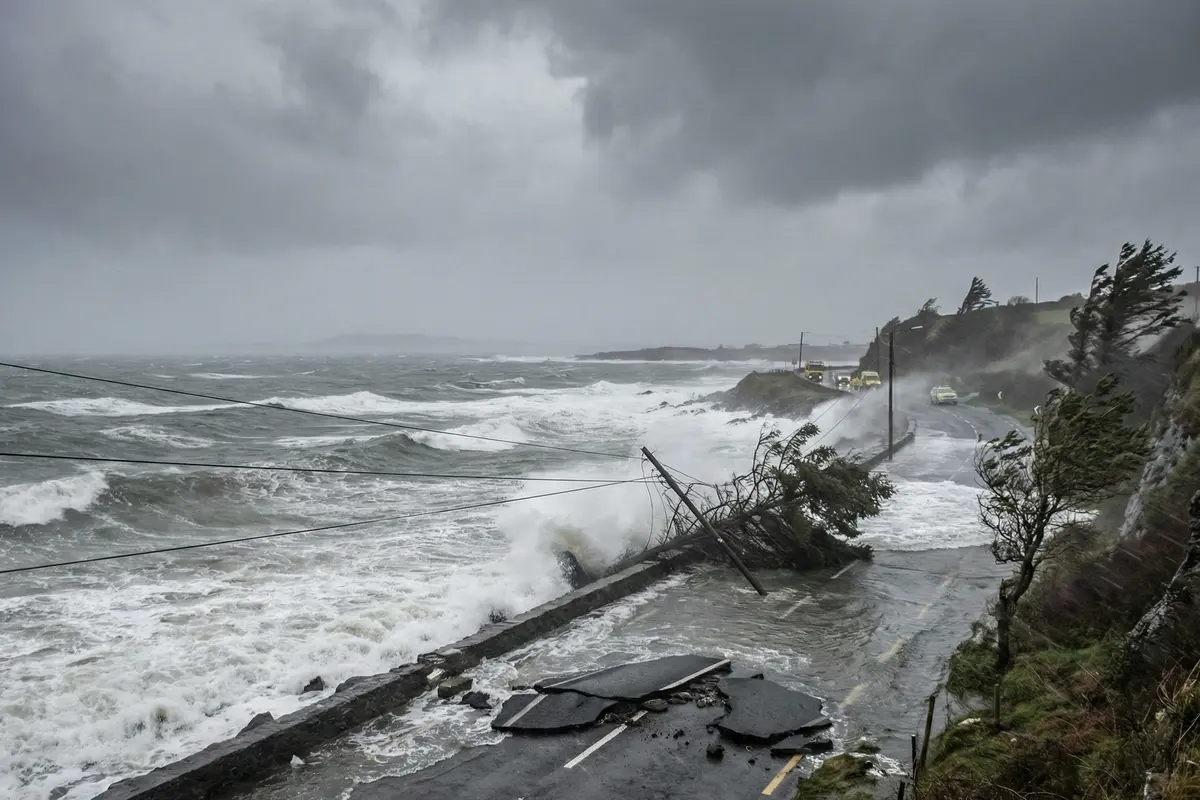
Storm Bram is a winter storm that formed over the Atlantic and moved quickly toward Ireland in December 2025. The system carried strong winds, heavy rain, and the risk of flooding in low-lying areas. Meteorologists named it Bram because of its expected impact on daily life. Coastal towns faced the first brunt of the storm, with waves crashing high onto streets and sea walls. Inland areas experienced strong winds that brought trees and debris onto roads, creating dangerous conditions for residents and travellers.
Weather Warnings Across Ireland
Met Éireann issued warnings days before Bram arrived. These alerts helped people prepare and stay safe. Status Orange warnings were in place for high winds in many counties. Status Yellow alerts covered additional areas for gusty winds and heavy rain. Red Marine warnings were issued along the coast, signalling dangerous seas and high waves.
Warnings changed as the storm moved eastward. Some areas experienced hours of strong winds while others had heavy rainfall. Residents were advised to remain indoors unless travel was essential, avoid coastal areas, and take care around fallen power lines and flooded roads.
Impact on Power and Homes
Storm Bram caused widespread electricity outages. Thousands of homes, farms, and businesses lost power, especially where trees fell onto power lines. Repair crews worked through rain and wind to restore electricity safely. Many families had to spend the night without heating, lights, or cooking facilities. Flashlights, candles, and battery-operated devices became essential. Generators helped some households, but for others, power restoration took several hours or even days.
Travel Disruptions
Travel during Storm Bram was risky. Flights were delayed or cancelled due to strong crosswinds and heavy rain. Some pilots aborted landings at the last moment to avoid unsafe conditions. Train lines were suspended after trees fell onto tracks. Roads were blocked with debris, standing water, and fallen branches. Drivers were urged to avoid unnecessary travel and follow safety updates. Emergency services guided motorists through safer routes and removed hazards from major roads.
Flooding and Coastal Damage
Heavy rainfall caused rivers to overflow and low-lying areas to flood. Coastal towns faced wave overtopping and dangerous surf conditions. Streets turned into small rivers in urban areas, making travel impossible. Some homes experienced water damage, and basements filled with rainwater. Emergency crews helped residents stranded by floodwater, including rescuing school buses and vehicles trapped in high water.
Community and Emergency Response
Emergency services responded rapidly to Storm Bram. Firefighters cleared fallen trees, rescued people from flooded areas, and assisted motorists. Coastguard teams monitored the dangerous seas and advised ships to avoid travel. Local councils began clearing debris from streets and public spaces. Community volunteers checked on neighbors, especially the elderly, to ensure safety.
One widely reported incident involved a school bus trapped in a flooded road. All children were safely rescued, and the event highlighted the importance of emergency preparedness during extreme weather.
Impact on Schools, Events, and Daily Life
Many schools closed during the storm to keep children safe. Public events, including Christmas markets and local fairs, were canceled or postponed. Shops closed early, and offices asked staff to leave before conditions worsened. The storm created a rare pause in daily routines, forcing families to stay home and adapt to power outages and blocked roads.
Residents shared experiences online, posting videos and photos of high waves, broken branches, and emergency crews at work. These updates helped communities stay informed and connected during the storm.
Weather Conditions by Region
Storm Bram affected every county, but impacts varied. Coastal areas faced the strongest winds and highest waves. Inland and midland regions struggled with power outages and heavy rainfall. Northern counties experienced gusty winds and some flooding. Across Ireland, the storm reminded everyone of the power of nature and the need for preparation and caution.
Safety Tips During and After the Storm
Even after Bram has passed, hazards remain. Residents should watch for fallen power lines and avoid them at all costs. Travel should be limited to essential trips, and drivers should remain cautious on wet and blocked roads. Staying updated via Met Éireann and local news is crucial. Keeping emergency supplies like flashlights, water, warm blankets, and charged phones is recommended. Securing outdoor items can prevent further damage from residual winds.
Looking Ahead
Meteorologists are monitoring the Atlantic for new weather systems. While Storm Bram has mostly passed, residents should remain alert. Small warnings for gusty winds or rainfall may still appear. Communities and emergency services continue cleanup and power restoration. Lessons learned from Bram will help Ireland prepare for future storms.
Storm Bram has left a strong mark. It disrupted daily life, caused widespread damage, and tested community resilience. People are slowly returning to normal routines while cleanup crews continue their work. The storm is a reminder of the importance of preparation, attention to warnings, and community support during extreme weather events.