 By
By Education in Ireland: Building Knowledge and Opportunity
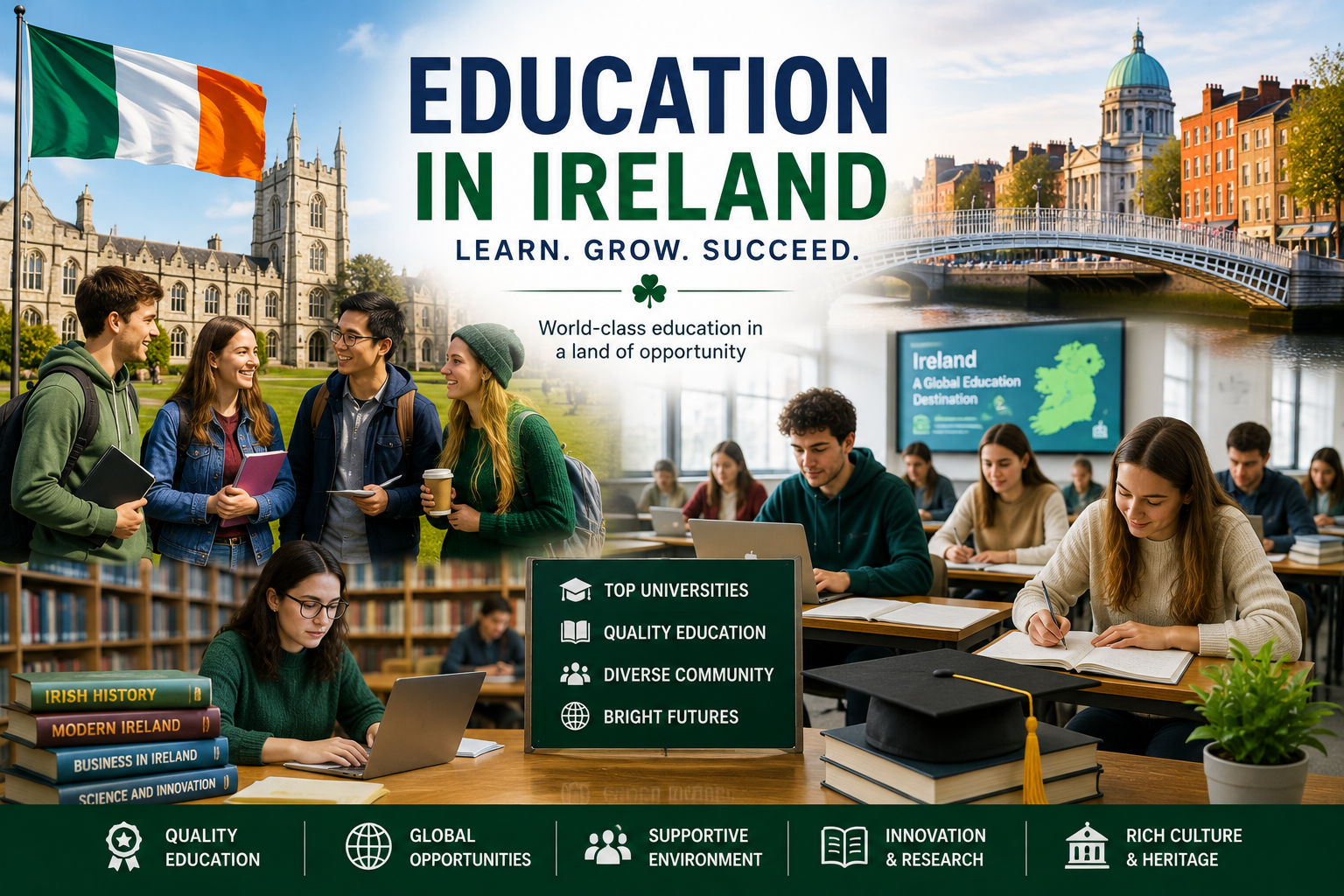
Education in Ireland plays an important role in the country’s social, cultural and economic development. From the first years of school to university and further education, learners can follow different paths depending on their interests and future goals.
The Irish education system includes primary education, post-primary education, further education and training, and higher education.
More importantly, education in Ireland is not simply about examinations. Schools and educational institutions also provide opportunities for creativity, personal development, practical skills and lifelong learning.
How Does Education in Ireland Work?
Education in Ireland is structured across several stages.
Young learners generally begin with primary education before moving into post-primary education. After secondary school, students can continue through further education and training or progress to higher education.
This structure provides different routes for students with different interests and ambitions.
Furthermore, Education and Training Boards have responsibilities for education and training services in their local areas, including post-primary and further education.
Primary Education in Ireland
Primary school is an important first step in the Irish education journey.
Children develop fundamental skills such as reading, writing, mathematics and communication. They are also introduced to subjects that encourage creativity, curiosity and an understanding of the world around them.
Primary education provides the foundation on which later learning is built.
As students progress through the years, they gradually develop the academic and social skills needed for post-primary education.
Post-Primary Education: The Next Big Step
Post-primary education follows primary school and introduces students to a broader range of subjects.
The Irish post-primary system includes the Junior Cycle and Senior Cycle.
The Junior Cycle provides students with a broad educational experience. Afterwards, students can progress to the Senior Cycle, where they work towards the Leaving Certificate.
The Transition Year programme is also available in many schools. It can provide students with opportunities to explore subjects, work experience, projects and personal development between the Junior and Senior Cycles.
Consequently, post-primary education can be both an academic and personal journey.
Education in Ireland and the Irish Language
Education in Ireland also has an important connection with the Irish language.
Irish, or Gaeilge, is taught within the education system, while some schools provide education through Irish.
Irish-medium schools are commonly known as Gaelscoileanna at primary level, while Irish-medium education is also available at post-primary level.
The Department of Education notes that schools can operate with Irish or English as their main language of instruction, while some English-medium post-primary schools may also have Irish-medium units called Aonaid.
This helps keep Ireland’s linguistic heritage connected to modern education.
Further Education and Training
Not every student follows the same educational route after secondary school.
Further Education and Training, often called FET, provides opportunities to develop practical, technical and professional skills.
Courses and training programmes can prepare learners for particular careers while also providing pathways towards additional education.
Apprenticeships and Post Leaving Certificate courses are examples of routes available within the wider further-education landscape.
Therefore, students can choose an educational path that matches their interests and career plans.
Higher Education in Ireland
Education in Ireland also includes a diverse higher-education sector.
Students can study at universities, technological universities and other higher-education institutions.
Higher education can lead to qualifications including certificates, diplomas, undergraduate degrees and postgraduate awards.
Ireland’s higher-education system includes institutions such as universities and technological universities, with the Higher Education Authority playing a strategic role in the development and governance of the sector.
As a result, students can explore a wide range of academic and professional subjects.
Universities and Modern Learning
Irish universities offer programmes across areas such as business, science, technology, engineering, medicine, arts and humanities.
Modern higher education has also expanded beyond traditional classroom learning.
Students may have opportunities to work on research projects, collaborate with other learners and develop practical skills alongside academic knowledge.
This combination can help prepare graduates for an increasingly competitive and technology-driven world.
Student Life in Ireland
Education is only one part of the student experience.
Campus life can include societies, sports, cultural events, volunteering and social activities. These experiences allow students to meet people with different interests and backgrounds.
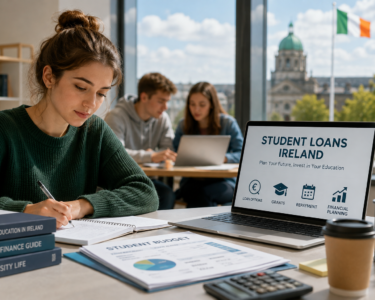
Ireland also provide Student loan to needy Students.
In addition, Ireland’s cities and towns offer different environments for student life.
From historic university campuses to modern learning facilities, students can experience a mixture of tradition and contemporary education.
Technology and the Future of Education
Technology is transforming education around the world, and Ireland is part of that transformation.
Digital platforms, online learning resources and modern classroom technology can make learning more flexible and interactive.
At higher-education level, technology is particularly important in areas such as artificial intelligence, computer science, engineering and data analysis.
At the same time, technology works alongside traditional teaching rather than completely replacing it.
Education in Ireland and Career Opportunities
Education in Ireland can provide students with knowledge and skills that support future careers.
Academic qualifications can be combined with practical training, work experience and professional development.
Furthermore, Ireland has a strong presence in sectors such as technology, pharmaceuticals, finance, healthcare and business.
For this reason, education and skills development remain important parts of Ireland’s wider economic landscape.
A Diverse Educational Environment
Ireland’s education system includes different types of schools and educational institutions.
School patronage can vary, with community, voluntary secondary and other school models operating within the system.
This creates different educational environments for families and students.
In addition, Ireland’s increasingly diverse population has brought new languages, cultures and perspectives into classrooms.
This diversity can enrich the educational experience and help students understand different viewpoints.
Why Education Matters in Ireland
Education contributes to more than academic achievement.
It can encourage curiosity, creativity, communication and independent thinking.
Students also develop social skills and learn how to work with people from different backgrounds.
Government information on education emphasizes helping learners reach their potential and contribute to Ireland’s social, cultural and economic development.
Therefore, education remains an important part of Ireland’s future.
The Future of Education in Ireland
The education landscape will continue to evolve.
Artificial intelligence, digital learning, changing career requirements and new technologies are likely to influence how students learn and how educational institutions operate.
At the same time, traditional subjects, teachers, libraries, laboratories and face-to-face learning will continue to have an important role.
The challenge is to combine innovation with the qualities that make education meaningful: curiosity, creativity, communication and human connection.
Final Thoughts
Education in Ireland offers a journey that can begin with the fundamentals of primary school and continue through secondary education, further training and higher learning.
Students can follow different routes depending on their interests, abilities and future ambitions.
From Irish-language education and traditional classrooms to modern universities and technology-focused programmes, the Irish education landscape continues to develop.
Ultimately, education is about more than earning qualifications. It is about building knowledge, discovering possibilities and preparing for the future.