
 By
By Rain in Ireland: Latest Weather Trends, Causes, Forecast and What Residents Should Know
Ireland has long been known for its beautiful green landscapes, dramatic coastlines, and ever-changing weather. One of the defining characteristics of the country is its frequent rainfall. Whether you are a resident, tourist, or someone planning to visit Ireland, understanding rain in Ireland can help you prepare for changing weather conditions and make the most of your day.
Rainfall plays a significant role in shaping Ireland’s natural beauty, agriculture, and water resources. Although many people associate Ireland with constant rain, the reality is much more interesting. Different regions experience varying rainfall levels throughout the year, influenced by Atlantic weather systems and seasonal climate patterns.
In this guide, we explore why Ireland receives frequent rainfall, how it affects daily life, what weather trends are expected, and practical tips for staying prepared.
Why Does Ireland Receive So Much Rain?
Ireland’s location on the western edge of Europe places it directly in the path of moist air masses moving from the Atlantic Ocean. These weather systems carry significant amounts of moisture that often result in rainfall as they reach the island.
The country’s relatively mild climate, combined with frequent low-pressure systems, contributes to regular showers throughout the year. Coastal regions generally experience stronger weather systems, while inland areas often receive lighter rainfall.
Despite its rainy reputation, Ireland rarely experiences prolonged periods of extreme rainfall compared to many tropical regions around the world.
Ireland’s Climate
Ireland has a temperate maritime climate, meaning weather conditions remain relatively mild throughout the year.
Some key climate characteristics include:
- Mild winters.
- Cool summers.
- Frequent cloud cover.
- Regular rainfall throughout all seasons.
- Rapid weather changes within a single day.
One common saying among locals is that you can experience four seasons in one day, reflecting Ireland’s highly changeable weather.
Rainfall Across Different Regions
Rainfall is not evenly distributed across Ireland.
Western counties, including Galway, Mayo, Kerry, and Donegal, generally receive higher rainfall because they face the Atlantic Ocean directly.
Eastern counties such as Dublin usually experience less rainfall compared to western regions.
Mountainous areas also receive significantly more precipitation due to moist air rising over elevated terrain.
These regional differences influence farming, tourism, outdoor activities, and local water supplies.
Seasonal Rainfall Patterns
Spring
Spring often brings a mixture of sunshine and rain showers. Weather conditions gradually become warmer while rainfall remains fairly regular.
Summer
Summer is generally the driest season in Ireland. However, rain showers remain common, especially during afternoons and evenings.
Many visitors are surprised that even sunny summer days may suddenly turn into brief rain showers.
Autumn
Autumn usually marks the return of stronger Atlantic weather systems.
Rain becomes more frequent, and windy conditions often accompany passing weather fronts.
Winter
Winter weather includes regular rainfall along with occasional frost and snowfall in higher elevations.
Heavy rain events sometimes occur during powerful Atlantic storms.
Why Rain Is Important
Although frequent rain may inconvenience outdoor plans, it provides several important benefits.
Rainfall supports Ireland’s famous green countryside by keeping vegetation healthy throughout the year.
It also replenishes reservoirs, rivers, and lakes that provide drinking water and support wildlife.
Agriculture, one of Ireland’s most important industries, depends heavily on consistent rainfall to maintain productive farmland and healthy livestock.
Without regular rain, Ireland’s natural landscapes would look very different.
Effects of Heavy Rain
Heavy rainfall occasionally causes disruptions.
Potential impacts include:
- Localized flooding.
- Difficult driving conditions.
- Delays to public transport.
- Reduced visibility on roads.
- Temporary travel disruptions.
Local authorities regularly monitor weather conditions and issue warnings whenever severe weather is expected.
Residents are encouraged to stay informed through official weather forecasts during periods of heavy rain.
Rain and Tourism
Ireland attracts millions of tourists every year despite its rainy reputation.
Visitors can still enjoy attractions by preparing appropriately.
Waterproof clothing, comfortable footwear, and flexible travel plans make sightseeing much more enjoyable.
Many famous destinations, including the Cliffs of Moher, Ring of Kerry, Giant’s Causeway, and Connemara National Park, remain beautiful even during light rainfall.
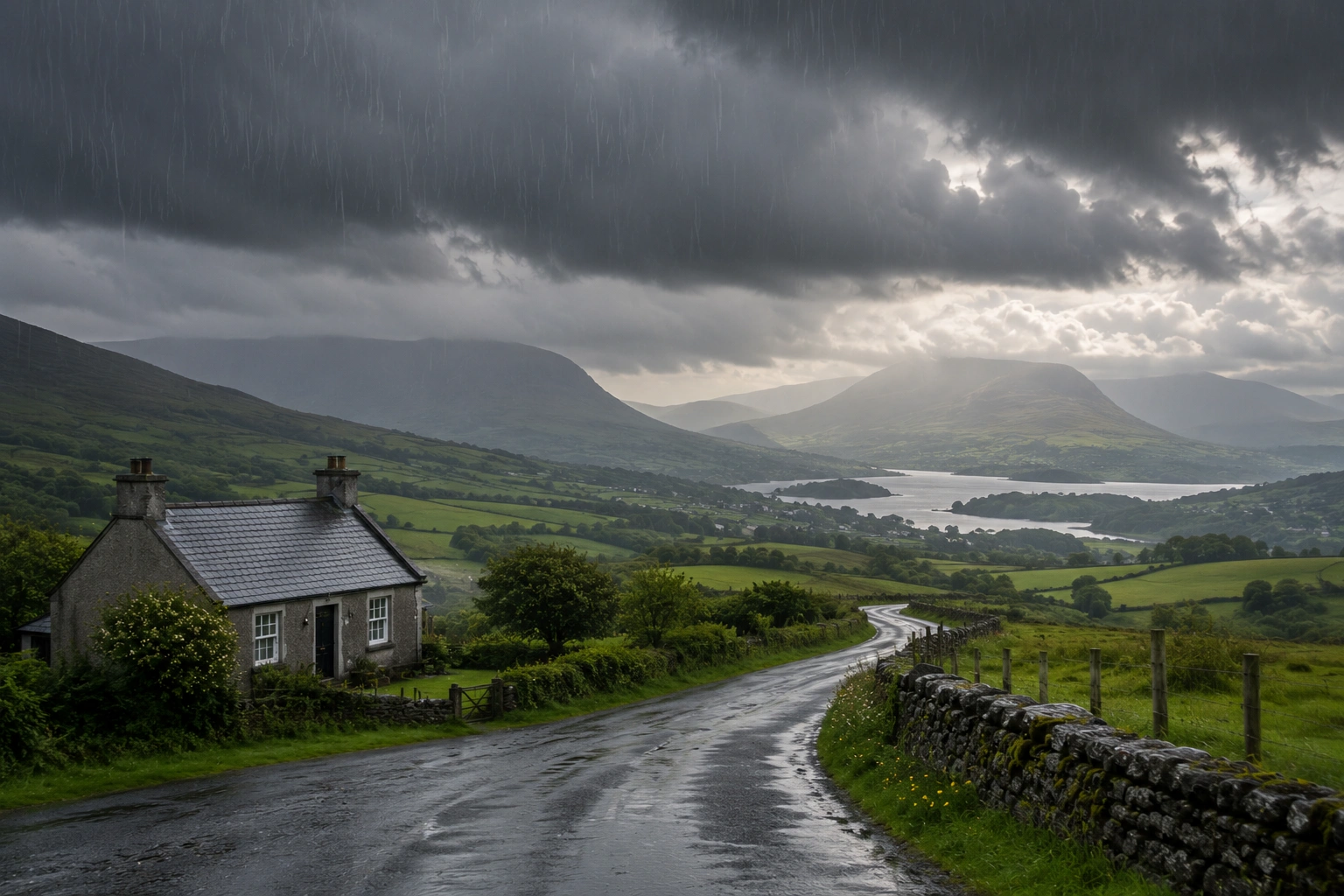
Rain often enhances Ireland’s scenic landscapes by creating dramatic skies and vibrant green scenery.
Travel Tips During Rain
If you are travelling across Ireland during rainy weather, consider the following advice:
- Carry a lightweight waterproof jacket.
- Wear shoes suitable for wet conditions.
- Check weather forecasts before travelling.
- Allow additional travel time during heavy rain.
- Keep electronic devices protected from moisture.
Good preparation allows visitors to enjoy Ireland regardless of changing weather.
Weather Forecasting
Modern forecasting technology has significantly improved weather prediction accuracy.
Meteorologists use satellite imagery, radar systems, ocean observations, and computer forecasting models to predict rainfall.
Forecasts now provide detailed information on:
- Rain intensity.
- Wind speeds.
- Temperature changes.
- Storm development.
- Weather warnings.
Checking forecasts before outdoor activities helps people plan more effectively.
Climate Change and Rainfall
Climate scientists continue studying how climate change may affect rainfall across Ireland.
Research suggests weather patterns could become more variable in the future, with some regions experiencing heavier rainfall events while others may face longer dry periods.
Governments and environmental organizations continue investing in flood management, sustainable water resources, and climate adaptation strategies to prepare for changing weather conditions.
Rain in Everyday Irish Life
Rain has become part of Irish culture and daily routines.
Many people keep umbrellas, waterproof jackets, and raincoats readily available throughout the year.
Outdoor sports continue despite light rainfall, while festivals and community events often adapt to changing weather conditions.
Rather than preventing activities, rain simply becomes another part of everyday life.
Rain Facts
Rainfall remains one of Ireland’s defining natural features.
Interesting facts include:
- Ireland receives rainfall during every month of the year.
- Western Ireland generally records more rainfall than eastern counties.
- Rain supports Ireland’s rich biodiversity and agriculture.
- The country’s mild climate prevents many extreme weather events common elsewhere.
- Weather conditions can change rapidly within hours.
These characteristics make Ireland’s climate unique within Europe.
Final Thoughts
Rain is an essential part of Ireland’s identity. While visitors sometimes focus on the country’s frequent showers, rainfall plays a vital role in maintaining its stunning green landscapes, healthy ecosystems, and thriving agricultural industry.
Whether you are planning a holiday, commuting to work, or simply enjoying the outdoors, understanding rain in Ireland helps you stay prepared throughout the year. Modern forecasting tools, suitable clothing, and flexible planning make rainy days much easier to manage.
For residents and visitors alike, Ireland’s rainfall is not simply a weather condition—it is one of the reasons the country remains one of Europe’s most naturally beautiful destinations.