 By
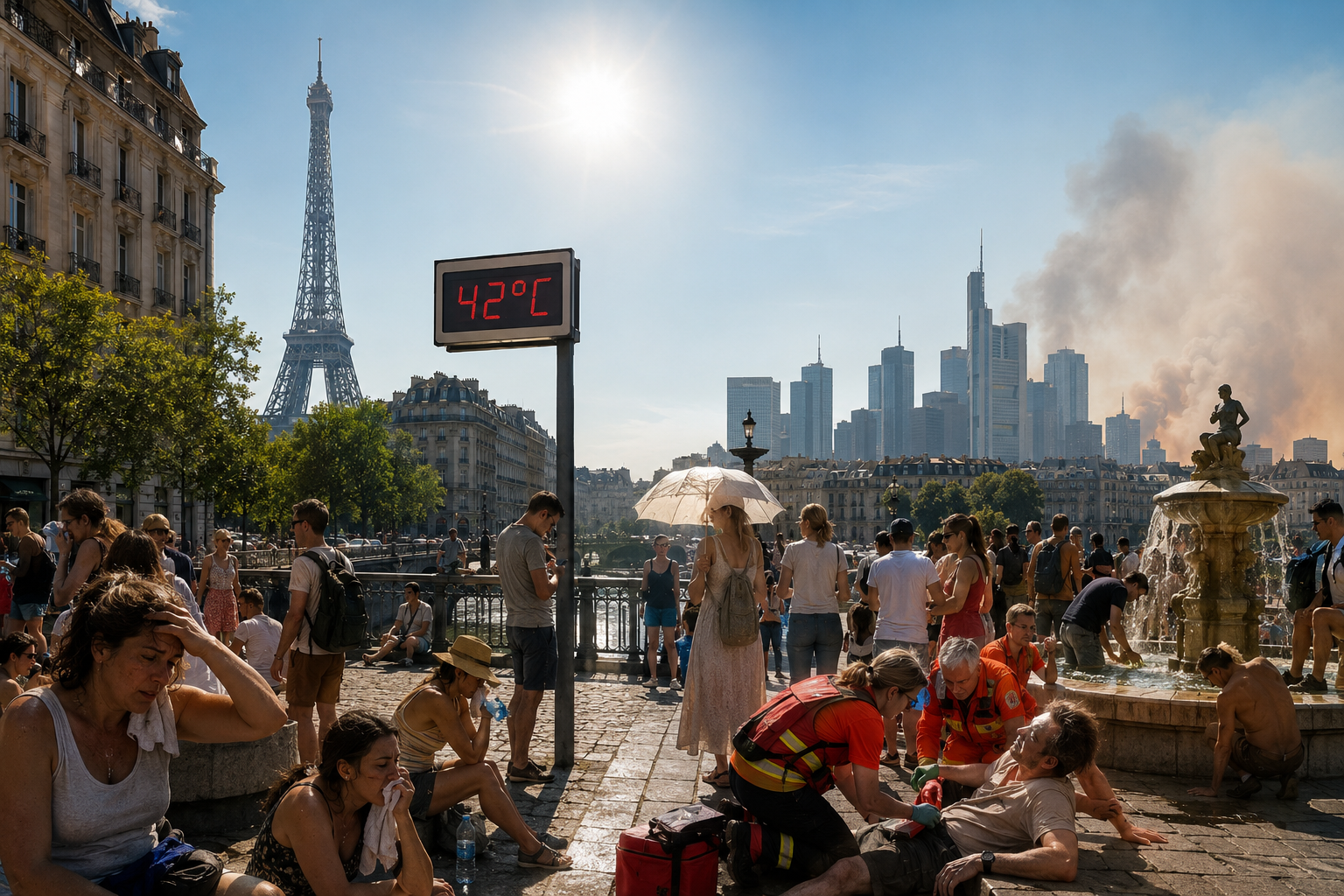
By Europe is facing one of its most dangerous heat waves in modern history. Temperatures have climbed well above normal across many countries. Cities known for mild summers have seen record-breaking heat for days in a row. Health experts, weather agencies, and governments are warning that the crisis is far from over.
The latest reports show that more than 1,300 excess deaths have already been linked to this heat wave. Millions of people continue to face dangerous conditions as temperatures remain far above average. Hospitals are treating more cases of heat stroke and dehydration. Schools have closed in several areas. Power grids are under heavy strain as air conditioning demand reaches record levels.
The World Health Organization (WHO) has called this event another sign that extreme heat is becoming the new normal. Europe, already the fastest-warming continent on Earth, is now seeing heat waves that once happened only once in a generation. Today, these events are becoming much more common.
This article explains what is happening, why temperatures are so high, which countries are most affected, the health risks, the role of climate change, and what people can do to stay safe.
Europe Faces Historic Heat Wave
Meteorologists describe the current heat wave as historic because temperatures have stayed extremely high for an unusually long time.
According to weather experts, cities like Paris and Frankfurt normally experience summer highs in the low 70s Fahrenheit (around 22°C). During this heat wave, temperatures have remained between 18°F and 30°F above average for nearly ten consecutive days.
This long period of extreme heat puts extra pressure on people, hospitals, transportation systems, and electricity networks. The human body has little chance to recover when nights also remain unusually warm.
Weather records show that many European countries experienced temperatures above 100°F (38°C). Several regions crossed 40°C, levels that are dangerous for human health.
Countries Hit Hard by Extreme Temperatures
The heat wave has spread across much of Western and Central Europe.
Countries experiencing severe heat include:
- Spain
- France
- Germany
- Italy
- Portugal
- Switzerland
- Netherlands
- Belgium
- Czech Republic
- Austria
- Hungary
- Croatia
Many of these countries have issued red weather alerts, the highest warning level.
Spain has seen temperatures above 43°C in several regions. Southern France has also experienced dangerous daytime heat combined with very warm nights.
Germany, usually known for milder summers, has recorded temperatures well above seasonal averages. Switzerland and the Netherlands also reached unusually high temperatures rarely seen in past decades.
Heat Wave Overview
| Category | Details |
|---|---|
| Trending Topic | European Heat Wave Death Toll Climbs |
| Main Cause | Persistent high-pressure system and climate change |
| Most Affected Countries | Spain, France, Germany, Italy, Portugal, Netherlands, Switzerland, Czech Republic |
| Highest Temperatures | Above 40°C (104°F) in several regions |
| Reported Excess Deaths | More than 1,300 |
| Main Health Risks | Heat stroke, dehydration, heart stress, breathing problems |
| WHO Warning | Extreme heat is becoming the new normal |
| Infrastructure Impact | Schools closed, power grids stressed, transport delays |
| Wildfire Risk | Extremely High |
| Primary SEO Keywords | European heat wave, Europe extreme temperatures, climate change Europe, heat wave deaths, WHO heat warning |
Death Toll Continues to Rise
Health experts say heat waves are often silent disasters.
Unlike floods or storms, extreme heat does not destroy buildings immediately. Instead, it places heavy stress on the human body. Many people become seriously ill without realizing how dangerous the situation has become.
The World Health Organization reports that more than 1,300 excess deaths have already been linked to this heat event.
Many of these deaths involve:
- Elderly people
- Children
- People with heart disease
- People with breathing problems
- Outdoor workers
- Homeless individuals
Doctors warn that the real number may continue to rise because heat-related deaths often take time to confirm.
WHO Calls Heat the Silent Killer
WHO Director-General Tedros Adhanom Ghebreyesus warned that Europe is heating faster than any other continent.
He said nearly 150 million people are currently living under dangerous heat conditions.
The WHO describes heat stress as a “silent killer.”
Unlike storms, heat can quietly damage the body over several hours or days.
Heat stress affects:
- Blood circulation
- Heart function
- Kidney function
- Brain activity
- Breathing
Many deaths happen inside homes because buildings trap heat overnight.
European homes were designed to keep warmth inside during winter. Many do not have air conditioning, making indoor temperatures dangerous during prolonged heat waves.
Why Europe Is Heating Faster Than Other Continents
Scientists say Europe is warming at about twice the global average.
Several factors contribute to this trend.
First, climate change has increased average global temperatures.
Second, changing weather patterns allow high-pressure systems to remain over Europe longer.
Third, dry soils increase daytime heating.
When soil contains little moisture, sunlight heats the ground instead of evaporating water. This creates even hotter conditions.
Cities also become much hotter because of concrete, asphalt, and buildings that absorb sunlight throughout the day.
This is known as the urban heat island effect.
Climate Change Is Making Heat Waves Worse
Climate scientists agree that climate change is increasing both the frequency and intensity of heat waves.
Warmer global temperatures make it easier for weather systems to produce record-breaking heat.
Heat waves that once happened every few decades are now appearing much more often.
Scientists say each additional degree of warming increases the chance of extreme weather events.
Longer summers, shorter winters, and more frequent droughts are already becoming common across Europe.
Climate experts warn that without major reductions in greenhouse gas emissions, future heat waves may become even hotter.
Health Risks During Extreme Heat
Extreme heat affects nearly every part of the body.
Common health problems include:
Heat Exhaustion
Symptoms include:
- Heavy sweating
- Weakness
- Dizziness
- Headache
- Nausea
Without treatment, heat exhaustion can become life-threatening.
Heat Stroke
Heat stroke is a medical emergency.
Symptoms include:
- Body temperature above 40°C
- Confusion
- Loss of consciousness
- Hot, dry skin
- Seizures
Emergency treatment is needed immediately.
Heart Problems
High temperatures force the heart to work harder.
People with heart disease face a greater risk of heart attacks during heat waves.
Kidney Damage
Heavy sweating causes dehydration.
Without enough fluids, the kidneys cannot work properly.
Wildfire Danger Increases Across Europe
Extreme heat also creates perfect conditions for wildfires.
Dry vegetation becomes easy to ignite.
Strong winds allow fires to spread rapidly.
Firefighters across Spain, Portugal, Greece, France, and Italy remain on high alert.
Wildfires threaten:
- Homes
- Forests
- Farms
- Wildlife
- Tourism
Smoke from fires also reduces air quality, creating more health risks.
Power Grids Under Heavy Pressure
Electricity demand rises sharply during heat waves.
Millions of people rely on air conditioners, fans, and cooling systems.
Power companies across Europe have reported record electricity demand.
Some regions have experienced:
- Power outages
- Reduced electricity supply
- Higher energy prices
Governments are encouraging people to reduce electricity use during peak afternoon hours.
Schools and Public Services Face Disruption
Extreme temperatures have forced many schools to close.
Some governments have shortened working hours for outdoor workers.
Construction companies, delivery services, and farm workers have also changed schedules to avoid the hottest parts of the day.
Public transportation has experienced delays because railway tracks expand under intense heat.
Road surfaces have softened in some areas, creating additional travel problems.
Agriculture Faces Growing Challenges
Farmers across Europe are dealing with severe stress on crops.
High temperatures increase water demand while reducing rainfall.
Crops affected include:
- Wheat
- Corn
- Sunflowers
- Grapes
- Vegetables
Livestock also suffer during prolonged heat.
Farmers must provide additional water and cooling for animals.
Lower crop production could increase food prices later this year.
Tourism Feels the Impact
Europe welcomes millions of tourists every summer.
This year’s heat wave has changed many travel plans.
Visitors are avoiding outdoor attractions during midday.
Tour operators are adjusting schedules.
Some hiking trails have closed because of wildfire danger.
Beach destinations remain popular, but health officials continue to warn visitors about sun exposure.
How Governments Are Responding
Governments across Europe have introduced emergency measures.
These include:
- Opening cooling centers
- Issuing heat alerts
- Distributing drinking water
- Increasing hospital staffing
- Checking elderly residents
- Restricting outdoor work
- Closing schools where needed
Many cities are also expanding tree planting and shaded public areas to reduce future heat risks.
How People Can Stay Safe
Health experts recommend several simple safety steps.
Drink water regularly even if you are not thirsty.
Stay indoors during the hottest hours.
Wear light-colored clothing.
Avoid heavy exercise during the afternoon.
Use fans or air conditioning if available.
Check on elderly relatives and neighbors.
Never leave children or pets inside parked vehicles.
Eat light meals and avoid alcohol during extreme heat.
Watch for signs of heat exhaustion and seek medical help if symptoms become severe.
What Scientists Expect Next
Weather forecasts suggest that some areas may receive temporary relief from cooler air.
However, scientists expect future summers to become hotter over the coming decades.
Climate models predict:
- More frequent heat waves
- Longer periods of extreme temperatures
- Increased wildfire seasons
- Greater pressure on water supplies
- More health emergencies
Experts say cities will need stronger heat action plans and better cooling systems to protect growing populations.
The Bigger Climate Challenge
The current European heat wave is more than a weather event.
It reflects a changing climate that affects health, agriculture, energy, transportation, and daily life.
Scientists continue to stress that reducing greenhouse gas emissions remains one of the most important long-term solutions.
Countries are also investing in cleaner energy, better urban planning, improved warning systems, and stronger healthcare responses.
These efforts aim to reduce the human cost of future heat waves.
Final Thoughts
The European heat wave of 2026 has become one of the most serious weather emergencies in recent years. Temperatures above 40°C have spread across many countries, pushing hospitals, power systems, and emergency services to their limits.
With more than 1,300 excess deaths already linked to the extreme heat, the event highlights the growing danger of climate change and rising global temperatures. The World Health Organization has warned that these deadly heat waves are no longer rare events. They are becoming a regular part of European summers.
Governments, scientists, and health experts agree that stronger climate action, better public planning, and improved heat preparedness are essential. While weather patterns may change in the coming weeks, the lessons from this historic heat wave will shape how Europe prepares for future summers.