 By
By In early February 2026, global attention turned to the United States. Top political figures warned that President Donald Trump may act to influence or subvert the 2026 midterm elections. These warnings came after sharp rhetoric from Trump and heated responses by lawmakers, journalists, and citizens.
Critics now fear Trump will take steps that could threaten the integrity of the elections. These concerns relate to election federalisation, voter suppression, and threats tied to past events. Trump’s statements have fed intense debate in the U.S. and around the world.
This long article breaks down what has happened, what it means, and why observers believe democratic norms are at risk.
What Has Trump Said About the 2026 Midterms?
In the days before the warnings grew intense, Trump made public comments about the upcoming midterms. His words came in speeches, interviews, and on social media.
Trump suggested that election systems in some areas should be taken over by federal authorities. He dropped hints about federalising elections in at least 15 Democratic-leaning regions. He claimed this change could protect the process. Yet the U.S. Constitution says each state runs its own elections.
Trump said elections are “rigged” and “stolen” without presenting evidence. He also urged changes to voter rules, such as requiring proof of citizenship to register and ending mail-in ballots — both highly controversial.
These statements alarmed many lawmakers and election experts. They argue that federalisation and strict voter requirements could suppress votes or give unfair advantage. Critics say Trump has renewed claims used in past election disputes.
Accusations From Top Democrats
Key Democratic leaders were among the loudest critics. One central voice was California Democrat Adam Schiff. He said Trump “intends to try to subvert the elections.” Schiff pointed to Trump’s past actions after the 2020 election as proof of what might come.
Schiff said Trump would work to suppress votes and then attempt to block or overturn results if Republicans lose ground. His warning echoed a long fight over election claims from Trump.
House Democratic leader Hakeem Jeffries also weighed in. He said his party will fight against Trump’s efforts to “nationalise” elections or take control away from local authorities. Jeffries stressed that elections must remain free and fair under constitutional rules.
These comments signal not just disagreement but a national fight over how the U.S. chooses leaders.
Why the 2026 Midterms Matter
Midterm elections occur halfway through a president’s term. They decide who controls Congress. The 2026 midterms could shape U.S. policy for the next two years.
If one party controls both chambers of Congress, they can pass or block major laws. That includes budgets, courts, foreign policy, and future election rules.
Because midterms often shift power, they draw sharp political focus. Trump and his critics see more than just seats on the line. They see political legitimacy. If one side controls election rules or results, it changes the balance of power long term.
Federalisation of Elections: What Is It?
In the U.S., federalisation means the national government takes over parts of the election process from states.
Currently, the Constitution gives most election power to states. Each state decides how to run polls, verify voters, and count ballots. Federal laws set certain standards, but states control most details.
Trump’s comments suggested expanding federal oversight. He said this would protect against fraud. But critics say this undermines constitutional law.
Many legal scholars argue that federalising elections could be unconstitutional. They say such power is reserved for legislatures at the state level. Federalising elections could shift balance away from local and state oversight.
Links to Past Election Disputes
Trump’s critics point to events after the 2020 election. Trump and some allies refused to accept the results then. They pushed legal challenges and public claims that the election was stolen.
That fight reached a peak on January 6, 2021, when a violent mob stormed the U.S. Capitol. Trump was later charged in federal court for his role in efforts to overturn 2020 results.
In 2026, Trump was again linked to legal scrutiny. An FBI raid at the Fulton County, Georgia election office seized ballots and voting records linked to the 2020 election. Trump publicly pushed false claims tied to that event.
This history shapes current fears that Trump will not accept future losses. Observers see his past behaviour as a sign of what could happen in 2026.
Table: Core Claims and Key Terms
| Topic | Simple Definition | Example or Context |
|---|---|---|
| Election federalisation | National control of election stages | Trump suggested federalised voting in Democratic areas. |
| Voter suppression concerns | Actions that may limit voter participation | Changes to ID laws or ending mail-in ballots. |
| Midterm elections | National votes for Congress | 2026 midterms could shift control of the House and Senate. |
| Subversion claims | Act to weaken democracy | Democrats say Trump could try to overturn results. |
| FBI raid & voting records | Law enforcement seizure of ballots | Raid at Georgia election office triggered debate. |
| Past election disputes | Arguments over previous results | 2020 election refusal to concede is central precedent. |
What Trump’s Supporters Say
Trump’s supporters reject the subversion claims. They say his focus is on election security and stopping fraud. They argue that new rules and federal oversight would make voting safer.
Some Republicans say federalisation could standardise voting laws in all states. They argue this helps fairness.
Supporters also point to past issues with voter roll accuracy and illegal votes as reasons to change systems. They say stricter rules are needed in some areas.
Still, critics argue that evidence for widespread fraud has repeatedly been rejected by courts and election officials.
Legal and Constitutional Debate
Any effort to shift election control to the federal level faces legal hurdles.
The U.S. Constitution gives states authority over elections. Federal laws can set some standards, but day-to-day operations are state tasks.
Legal experts say federalisation laws would likely be challenged in courts. Some argue such laws would be unconstitutional.
Political battles in Congress would also be fierce. Democrats and some moderate Republicans oppose these changes. Courts and public opinion could shape the final outcome.
Public Reaction in the U.S.
Many citizens have taken to public forums to express fear or support.
Some Americans worry that election interference claims could harm democracy. They say free and fair elections are the core of U.S. political stability.
Others support measures they see as improving election trust.
Across social media and news outlets, debates have been intense. Non-partisan groups urge calm and respect for legal checks and balances.
International Response
Foreign governments and observers have voiced concern. U.S. allies emphasise the importance of democratic elections. Some say political uncertainty could affect global markets and alliances.
International news outlets have covered the story widely. They highlight the debate over American democracy’s stability.
Why This Matters to Everyone
The 2026 midterms are not just a U.S. issue. The United States plays a large role in world politics.
If democratic norms weaken in the U.S., it could embolden leaders elsewhere to challenge elections in their own countries. A stable U.S. election system is seen as a global example.
What Might Happen Next
The next months before the midterms could be intense:
- Congress may debate election law changes.
- Courts could hear legal challenges.
- Election officials may prepare for heightened scrutiny.
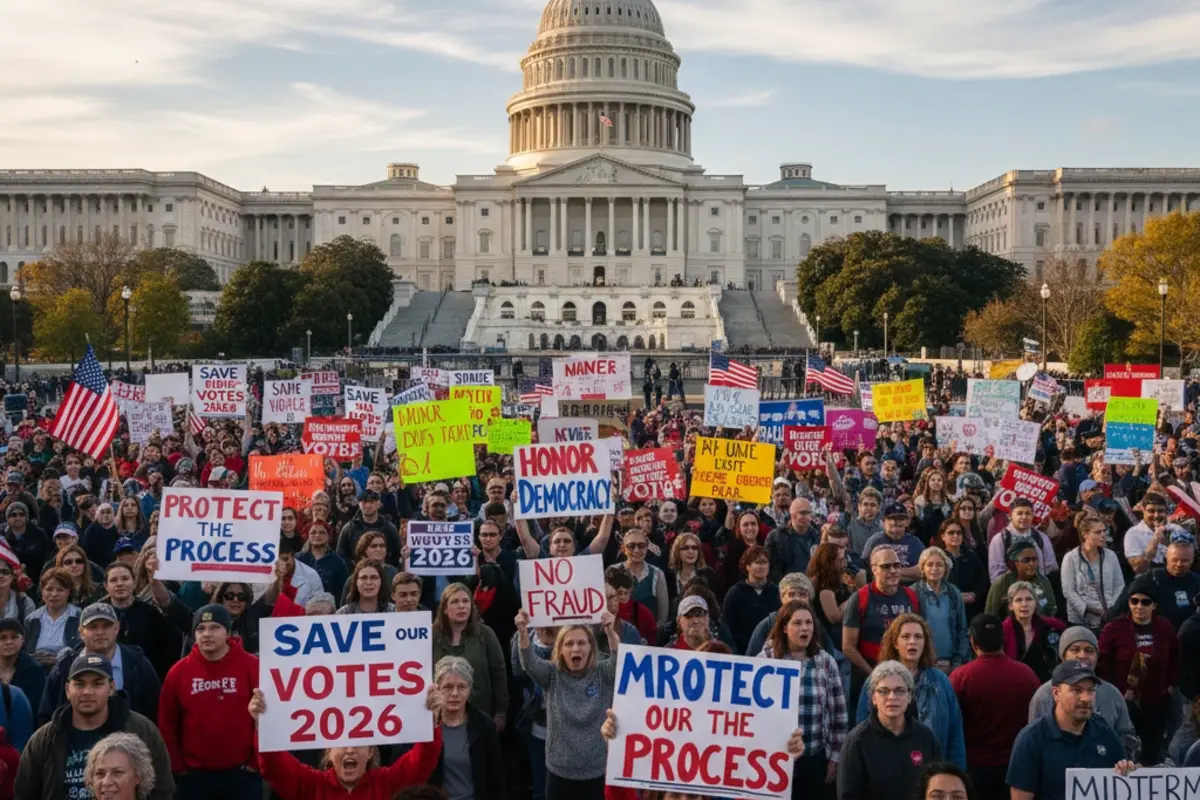
- Public protests and rallies may increase.
- Media coverage will focus on every Trump comment.
Citizens and leaders will watch closely. The outcome will shape U.S. politics far beyond 2026.
How to Follow the Issue
If you want updated information:
- Check reputable news outlets regularly.
- Follow official statements from the U.S. Department of Justice.
- Watch congressional hearings or records.
- Look for non-partisan election watchdog reports.
- Avoid unverified social media claims.