 By
By Ireland’s asylum accommodation system faced serious challenges in January 2026. New figures show that on arrival in the State there was no space for about 392 asylum seekers in the official accommodation network. This problem marks another month where the system could not house every new arrival as places were full. The issue underlines ongoing strain on housing services and the wider impact on people seeking asylum here.
This article explains what happened, why there is pressure, how many people are affected, and what the government is doing. It also looks at longer-term trends in applications and accommodation. The goal is to give readers a clear picture of the situation so they can understand how the system works and what the challenges are.
The Core Problem: No Beds Available
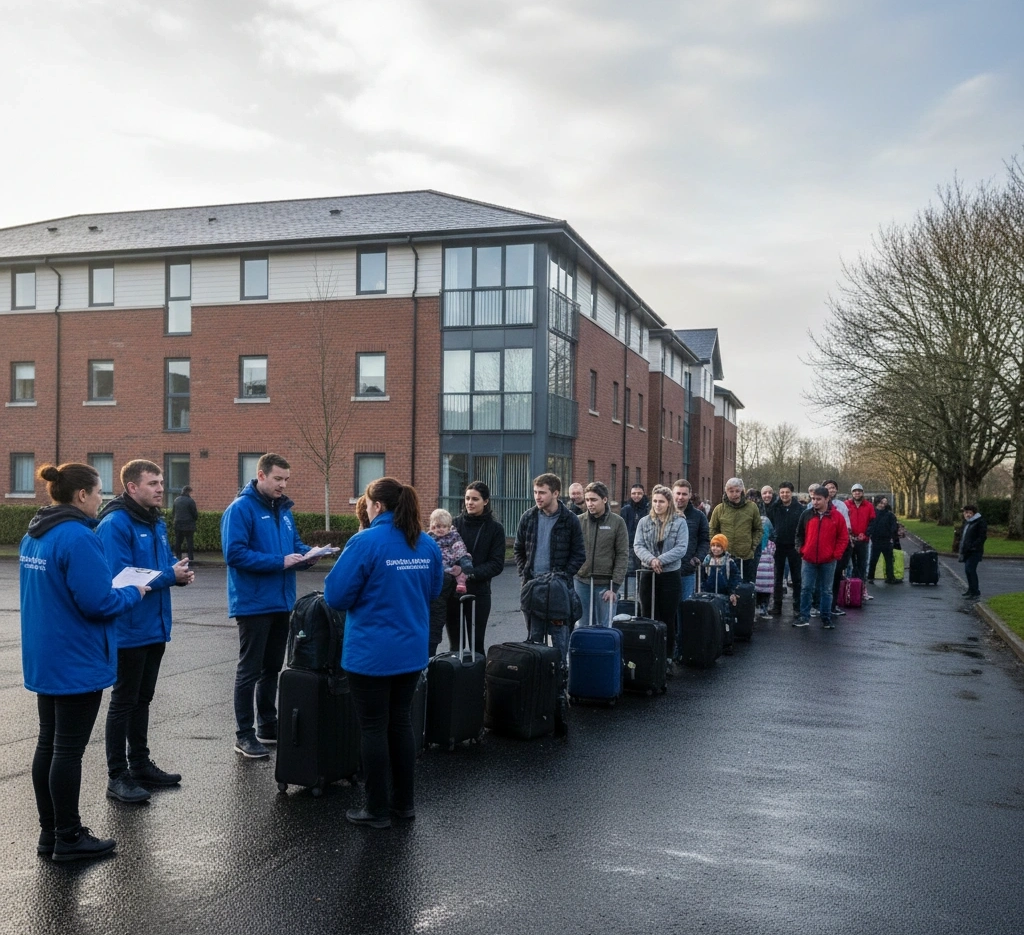
In January this year, 392 asylum seekers arrived wanting a place in the State accommodation system. There was no bed for them at the time of arrival. This figure was confirmed by the Minister for Justice.
The lack of space was not a one-off. In December 2025, space was unavailable for 387 asylum seekers as they arrived. There were also no places for more than 400 people in each of September, October and November 2025. For several months in a row, the pattern shows a system under pressure.
Being without a bed means people may need to stay in temporary spots, wait for a place, or sleep outdoors until space opens up. This adds stress to already difficult journeys for people seeking protection. It also puts pressure on emergency services and community groups trying to help.
What Is the IPAS Accommodation System?
The International Protection Accommodation Service (IPAS) is the network that houses people who apply for asylum in Ireland. When people arrive to seek protection, IPAS offers them a place to stay while their claims are processed.
As of early February 2026, there were about 2,591 beds available across the system. These include:
- 2,000 beds in mixed accommodation centres
- 343 beds for families
- 248 beds for single males
In addition to this, people may stay in hundreds of accommodation centres around the country for work or other reasons.
The system also keeps some spaces reserved. Some beds cannot be used because they are needed for people moving between places or because they are closed for repairs or health reasons.
Why Does Shortage Happen?
There are several reasons why beds are sometimes not available:
1. Unprecedented Growth in Applications
The number of people applying for asylum rose quickly from 2022 to 2024. This created huge pressure on the accommodation system. Many more people needed places to stay than ever before.
In the past few years, new applications reached record highs. In 2024, about 18,651 people applied for asylum. This was the highest number recorded. In 2025, the figures fell to about 13,160 asylum applications. This was a drop from the record level, but still a large number of new applications.
Even though the number fell, the longer stays from earlier years still fill beds and add strain. People can be in the system for months while their applications are processed, which slows turnover and leaves fewer free beds for new arrivals.
2. Space Reserved for Vulnerable Cases
The system must keep some beds free for people with special needs. Beds are sometimes blocked for people who have health problems or other vulnerabilities. These spots cannot be given to new arrivals even if others are waiting.
3. Beds Out of Use
Some beds are not available each day because they are closed for many reasons:
- Renovation work
- Infection control
- Rooms being reorganised for families
These issues mean fewer beds are ready to be used even when they are listed.
4. Ongoing Movement Within System
IPAS supports an active system. On average, hundreds of people move in, out and between centres each week. This ongoing movement can make planning and bed allocation harder when supply is tight.
Which Groups Are Most Affected?
Among asylum seekers, single male applicants have been especially affected by accommodation shortages. For some time, this group has faced long waits for a bed. This pressure has existed since early 2022.
In 2024, at the height of the crisis, hundreds of single men were forced to stay in tents near the border of accommodation services in Dublin city. Many were waiting for a space to become available.
Steps are being taken to improve the situation. Since March 2025, the number of single male applicants waiting for a place has dropped from over 3,500 to around 453. This shows slow improvement, but the group is still facing long waits.
How Many People Are in the IPAS System?
Across Ireland, the IPAS network houses a large number of people seeking protection. After the surge in applications in recent years, more than 33,000 people are living in accommodation centres nationwide.
These centres house a mix of people, including families, single adults, and children. Many of these people are there because they are waiting for decisions on their applications.
The scale of these numbers is high compared with past years. In earlier times, the accommodation network was smaller and fewer people applied. The dramatic growth created urgent needs for housing space, support services, and community care.
Government Response and Priorities
The Department of Justice says it always tries to use the accommodation it has in the best way. The priority is to make sure the most vulnerable people and families are housed first.
The Minister for Justice has said the department works to keep some beds free to receive daily arrivals and those needing urgent help. These reserved beds help reduce the number of people waiting without shelter.
The government has set a target for making sure that at least 15 per cent of beds are available for new arrivals at any time. This goal aims to keep some flexibility in the system so that unexpected arrivals can be housed quickly.
However, the system remains under pressure because of high demand and the long stay of many residents. It will take time and planning to reach a stable balance between supply and demand.
Broader Trends in Asylum Applications
Though accommodation is the most visible stress point, it relates closely to asylum application levels.
The number of people applying for asylum in Ireland fell in 2025 compared with the record year of 2024. In 2025, about 13,160 people applied for asylum. This number was significantly lower than the previous year’s record 18,651 applications.
Even though applications fell, the large number of people already in the system still occupies space. Many of these people remain in accommodation while waiting for decisions or for housing outside the system once their status is confirmed.
What This Means for People Seeking Protection
For asylum seekers, the shortage of space means uncertainty and stress. Some arrive with few resources and must wait for days or weeks to find a stable place to stay.
People arriving with families may feel more secure, because family beds tend to be prioritised. But single adults, especially single men, can face long waits and uncertainty.
Prolonged waits also affect mental health and daily life. Living without a stable roof can make it harder to access services, education, and work.
Public Debate and Policy Discussion
The accommodation issue has fueled public debate in Ireland. Some say the system must adapt to meet peaks in arrivals. Others point out the cost of housing a large number of people for long periods. Recent reports show the State’s spending on accommodation has risen significantly, even as applications have dropped.
Critics argue that better planning and faster processing could reduce pressure on accommodation. Supporters of strong protection systems say Ireland must uphold its duties to people seeking safety. Both sides recognise the need for solutions that protect human dignity and manage housing demands.
Impacts Beyond Accommodation
Pressure on accommodation can affect other areas of public policy:
- Healthcare services may feel strain when large groups await housing.
- Education services must adjust to new children joining schools.
- Local communities may require more support and planning.
- Public spending on accommodation and services can rise sharply.
- These are real effects felt beyond the asylum system itself. They show how interconnected housing, services, and community life can be when many people arrive seeking protection.