 By
By Marlay Park’s Historic ‘Ha-Ha’ Wall Repairs to Cost €660,000: Why the Landmark Matters
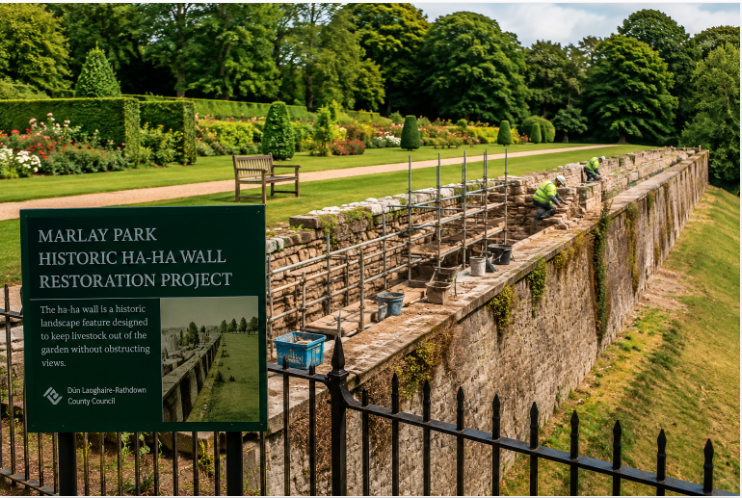
Repairs to the historic ha-ha wall at Marlay Park are expected to cost €660,000, highlighting the challenges and importance of preserving Ireland’s architectural heritage. Located in one of Dublin’s most popular public parks, the centuries-old structure is more than just a boundary wall. It is a unique landscape feature that combines practical design with historical significance.
The restoration project has attracted public attention because of its substantial price tag and the cultural value of the structure. While the term “ha-ha wall” may sound humorous, it refers to a distinctive landscaping feature that dates back hundreds of years. Designed to keep livestock out of formal gardens without blocking scenic views, ha-ha walls became a defining element of many grand estates across Britain and Ireland.
The planned restoration of Marlay Park’s ha-ha wall reflects the ongoing need to protect historical landmarks while ensuring public safety and preserving cultural heritage for future generations.
What Is a Ha-Ha Wall?
A ha-ha wall is a recessed landscape barrier consisting of a vertical retaining wall on one side and a gently sloping bank on the other. Unlike traditional walls or fences, it creates a physical boundary without interrupting the surrounding landscape.
The unusual name is believed to have originated in 18th-century Europe, where visitors were said to exclaim “ha-ha” upon suddenly discovering the hidden barrier while walking through landscaped gardens.
Ha-ha walls became popular in large country estates because they allowed property owners to keep grazing animals away from gardens while maintaining uninterrupted views across the countryside.
Today, these structures are considered valuable examples of historic landscape architecture.
The History of Marlay Park
Marlay Park, located in Rathfarnham in South Dublin, is one of Ireland’s best-known public parks. Covering more than 300 acres, it attracts visitors throughout the year for walking, sports, concerts, family activities, and outdoor recreation.
Originally developed as part of a grand estate, the park contains several heritage features, including historic buildings, woodlands, ornamental gardens, and the famous ha-ha wall.
Over time, weather conditions, natural ageing, vegetation growth, and structural movement have affected sections of the wall, making restoration necessary to preserve its historic character and ensure visitor safety.
Why Repairs Will Cost €660,000
The estimated €660,000 repair cost reflects the complexity of restoring a protected historical structure rather than simply rebuilding a modern wall.
Conservation projects often require:
- Specialist heritage engineers.
- Traditional construction materials.
- Archaeological and historical assessments.
- Careful structural stabilisation.
- Compliance with conservation standards.
Unlike ordinary construction projects, restoration work must preserve the original appearance and historic integrity of the structure wherever possible.
Each stone may require inspection, cleaning, repair, or replacement using materials that closely match the original construction.
Why Historic Preservation Matters
Historic landmarks provide a direct connection to Ireland’s cultural and architectural past.
Preserving structures such as the Marlay Park ha-ha wall offers several long-term benefits.
First, they help educate future generations about historical landscape design and estate planning.
Second, heritage sites contribute to local tourism by attracting visitors interested in architecture, history, and culture.
Third, restoration projects protect irreplaceable structures that cannot simply be recreated once lost.
Many conservation experts argue that investing in preventative maintenance is often more cost-effective than allowing historic structures to deteriorate beyond repair.
Ha-Ha Walls in Literature and History
One reason the ha-ha wall has attracted renewed public interest is its appearance in classic English literature.
These landscape features were commonly found on the estates of wealthy landowners during the 18th and 19th centuries and are referenced in works by celebrated novelist Jane Austen. Their inclusion in literature reflects how familiar they were in the countryside of that period.
Beyond literature, ha-ha walls can still be found in historic gardens, castles, manor houses, and country estates throughout Ireland, the United Kingdom, and parts of continental Europe.
Their clever design remains admired by architects and landscape historians today.
Challenges of Restoring Historic Structures
Conserving heritage buildings presents unique engineering and financial challenges.
Historic structures often require detailed surveys before restoration begins.
Workers must balance structural safety with historical authenticity, ensuring modern repair techniques do not damage the original design.
Weather exposure, groundwater movement, tree roots, and centuries of natural wear can all weaken masonry structures over time.
Because many historic features are protected by conservation laws, restoration work usually involves careful planning and expert oversight.
Public Reaction to the Repair Project
The estimated €660,000 cost has sparked discussion among local residents and taxpayers.
Some people question whether such a large investment is justified, while others argue that protecting historically significant landmarks is an essential responsibility.
Supporters believe preserving cultural heritage benefits education, tourism, and future generations.
Critics often point to broader public spending priorities, suggesting limited resources should first address housing, healthcare, or transport.
These debates commonly arise whenever governments invest in heritage conservation projects.
Facts About Ha-Ha Walls
Ha-ha walls first became popular during the 18th century as part of landscape garden design.
Their hidden construction allows uninterrupted views while preventing animals from entering formal gardens.
Many surviving ha-ha walls are now protected as heritage structures because of their architectural importance.
Historic restoration projects frequently cost more than modern construction because conservation specialists must preserve original materials and traditional craftsmanship.
The Future of Marlay Park
Once restoration is completed, the Marlay Park ha-ha wall is expected to remain an important feature of one of Dublin’s most visited parks.
Conservation work will help ensure visitors continue to enjoy both the park’s natural beauty and its historic landscape for decades to come.
As Ireland continues investing in heritage preservation, projects like this demonstrate the balance between protecting history and maintaining public infrastructure.
The restoration also serves as a reminder that cultural landmarks require ongoing maintenance if they are to survive future generations.
Conclusion
The planned €660,000 restoration of Marlay Park’s historic ha-ha wall highlights both the challenges and importance of preserving Ireland’s architectural heritage. Although the cost has generated public debate, conservation experts view the project as an investment in protecting a rare landscape feature with centuries of historical significance.
From its ingenious design to its appearance in classic literature, the ha-ha wall remains a fascinating part of Ireland’s cultural landscape. By restoring this unique structure, Dublin ensures that future visitors can continue appreciating one of the country’s most distinctive historic landmarks while learning about the history and craftsmanship behind its creation.