 By
By Environmental Issues in Ireland: Understanding the Challenges
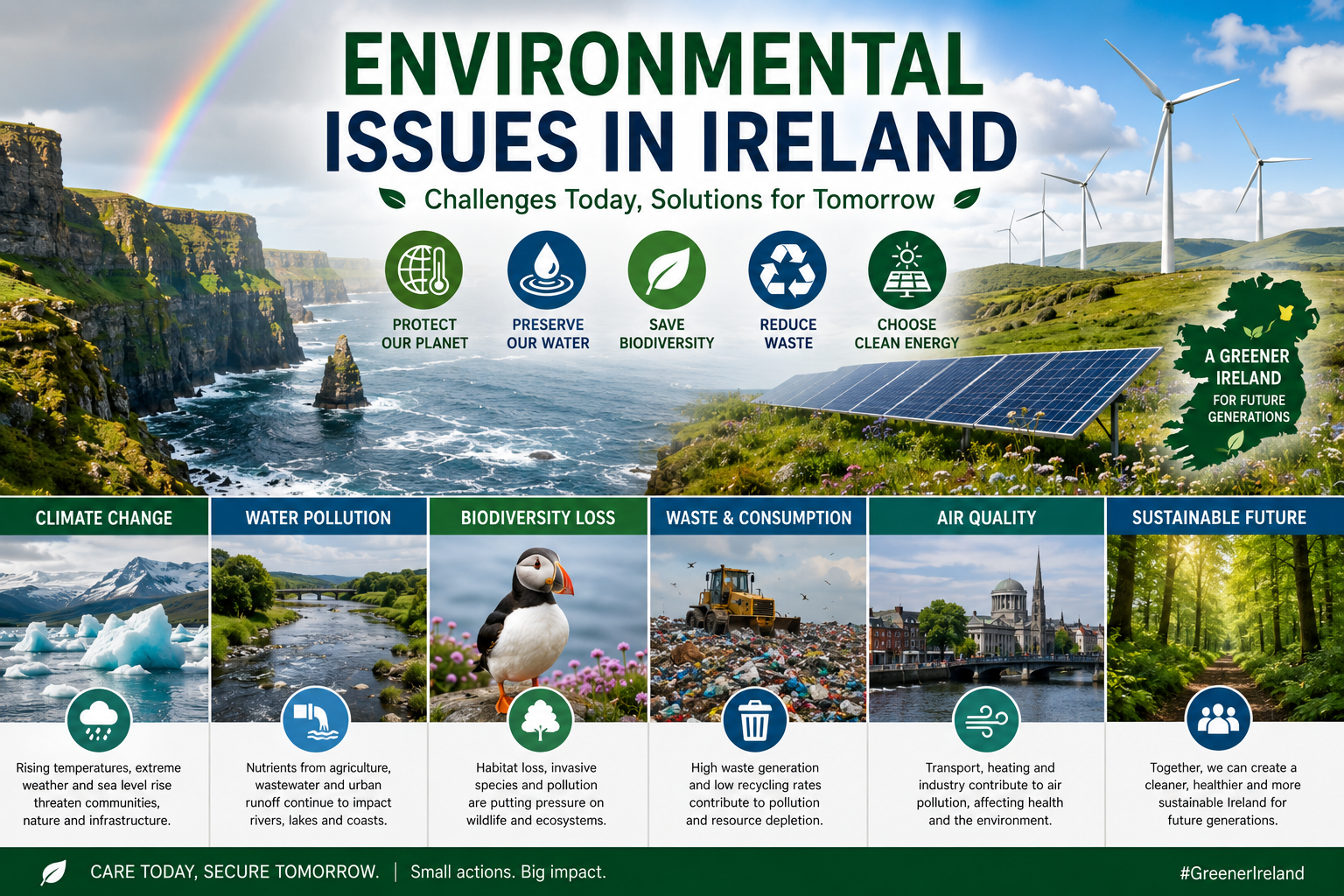
Environmental Issues in Ireland affect the country’s landscapes, waterways, wildlife, communities and future development. From climate change and water quality to biodiversity and waste, Ireland faces several environmental challenges that require long-term action.
Ireland is known for its green landscapes, coastline, rivers, lakes, peatlands and diverse natural habitats. Protecting these resources is therefore important not only for nature but also for communities, agriculture, tourism and the wider economy.
The Environmental Protection Agency (EPA) continues to monitor key environmental indicators, including water quality and greenhouse-gas emissions.
What Are the Main Environmental Issues in Ireland?
Environmental Issues in Ireland cover several connected areas.
Some of the most important include:
- Climate change
- Water quality and pollution
- Biodiversity loss
- Waste and resource consumption
- Air pollution
- Pressure on natural habitats
- Flooding and other climate-related risks
These issues are often connected. For example, climate change can increase pressure on water resources, while land-use changes can affect biodiversity and water quality.
Understanding these connections is essential when considering Ireland’s environmental future.
Climate Change and Ireland
Climate change is one of the biggest environmental challenges facing Ireland.
Government information identifies potential impacts including rising sea levels, more intense rainfall and storms, increased flood risks, summer water shortages and changes affecting plant and animal species.
Ireland has established climate policies designed to reduce emissions and strengthen resilience.
The Climate Action Plan 2025 sets out measures supporting Ireland’s goal of becoming a climate-neutral economy no later than 2050. It also includes a pathway toward reducing national emissions by 2030.
Water Quality: A Major Environmental Concern
Ireland’s rivers, lakes, groundwater, estuaries and coastal waters are valuable natural resources.
However, water quality remains a significant environmental challenge.
The EPA’s 2026 assessment found that overall water quality showed little change in 2025. Excess nutrients from agriculture and wastewater remain major challenges, with nitrate and phosphorus levels still too high in many waters.
This makes protecting waterways an important part of Ireland’s environmental strategy.
Waste and Recycling Challenges
Waste management is another important part of Environmental Issues in Ireland.
Households and businesses produce large quantities of waste, creating challenges around collection, recycling, treatment and disposal.
Ireland has been moving toward a circular economy, which focuses on keeping products and materials in use for longer through reuse, repair and recycling.
Reducing unnecessary consumption can also help lower pressure on natural resources.
Biodiversity and Nature Protection
Ireland’s natural environment supports a wide variety of plants, animals and habitats.
Its peatlands, wetlands, woodlands, grasslands, rivers, lakes and coastal environments all play important ecological roles.
However, biodiversity faces pressure from human activity and environmental change.
Government information highlights the importance of protecting habitats because biodiversity supports clean water, soil fertility, pollination, climate regulation and other ecosystem services.
Protecting nature is therefore about more than preserving beautiful landscapes. It also supports the systems that communities depend on.
Pollution and Wastewater
Wastewater management is closely connected to water quality.
The EPA reported in 2025 that the volume of raw sewage discharged had fallen significantly, but wastewater treatment problems remained at a number of plants.
Effective wastewater infrastructure can help reduce pollution entering rivers, lakes and coastal waters.
This makes continued investment, monitoring and enforcement important for Ireland’s environmental protection.
Agriculture and the Environment
Agriculture is an important part of Ireland’s economy and rural communities.
At the same time, agricultural activity can influence emissions, water quality, soil health and biodiversity.
Excess nutrients from agriculture are identified by the EPA as one of the major challenges affecting Ireland’s water quality.
Finding a balance between productive agriculture and environmental protection is therefore an important part of Ireland’s sustainability journey.
Flooding and Extreme Weather
Ireland’s climate is also creating challenges related to extreme weather.
Heavy rainfall can increase the risk of flooding and can put additional pressure on drainage and wastewater systems.
Government climate information identifies increased risks from flooding, intense precipitation, storms and summer water shortages.
Preparing communities and infrastructure for these changes is an important part of climate adaptation.
Environmental Issues in Ireland and Coastal Areas
Ireland’s long coastline is an important environmental and economic asset.
Coastal ecosystems support marine life, tourism, fishing and recreation.
However, coastal areas can experience pressure from pollution, development, climate change and rising sea levels.
The EPA reported that bathing-water quality remained high overall in 2025, with 98% of monitored bathing sites meeting or exceeding the minimum required standard. However, heavy rainfall can increase the risk of contamination from wastewater, urban and agricultural sources.
This shows why maintaining coastal water quality requires continued monitoring and protection.
Renewable Energy and a Greener Future
Ireland is also working to transform its energy system.
Moving toward cleaner energy sources can help reduce dependence on fossil fuels and support long-term climate goals.
Ireland’s climate strategy includes changes across energy, transport, buildings and other sectors as part of the wider transition toward a climate-neutral economy.
Renewable energy is therefore an important part of the country’s environmental future.
How Can Ireland Address Environmental Challenges?
Solving Environmental Issues in Ireland requires action from governments, businesses, communities and individuals.
Important areas include:
- Protecting rivers, lakes and coastal waters
- Restoring natural habitats
- Reducing waste
- Increasing reuse and recycling
- Improving energy efficiency
- Expanding cleaner energy
- Supporting sustainable agriculture
- Preparing communities for climate risks
- Improving environmental monitoring and enforcement
These actions work best when they are connected rather than treated as separate environmental projects.
Building a More Sustainable Ireland
Ireland’s environmental future depends on balancing economic development with the protection of natural resources.
A sustainable approach can support cleaner communities, healthier ecosystems and greater resilience to climate change.
The government’s environmental strategy aims to combine climate action with biodiversity protection and sustainable economic development.
This means environmental protection is becoming an increasingly important part of Ireland’s long-term planning.
Why Environmental Protection Matters
Ireland’s natural environment is closely connected to everyday life.
Clean water supports communities. Healthy soils support food production. Biodiversity strengthens ecosystems. Coastal areas support tourism and marine life.
Protecting these resources today can help ensure they remain available for future generations.
That is why addressing Environmental Issues in Ireland is not simply about protecting nature. It is also about building a healthier, more resilient and sustainable country.
Final Thoughts
Environmental Issues in Ireland include climate change, water quality, biodiversity loss, waste, pollution and pressure on natural habitats.
The challenges are significant, but Ireland is also taking steps toward a more sustainable future through climate policies, environmental monitoring, circular-economy initiatives and nature protection.
The road ahead will require continued cooperation and long-term commitment.
If you are interested in more Ireland-focused topics, you can also explore our guide to Education in Ireland.
Ultimately, protecting Ireland’s environment means protecting the landscapes, communities, wildlife and natural resources that make the country unique.