 By
By Slievenamon Wildfire Enters Fourth Day as Firefighters Continue Battle Against Co Tipperary Blaze
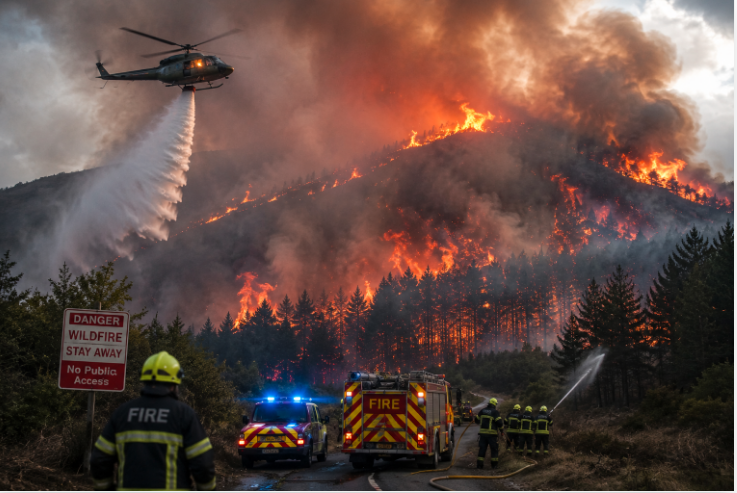
The Slievenamon wildfire has entered its fourth consecutive day, with firefighters continuing efforts to contain one of the most significant wildfires recently recorded in County Tipperary, Ireland. The blaze, which started on Monday morning, spread rapidly across the mountain before extending into an adjoining Coillte forest, creating major challenges for emergency crews working in difficult terrain.
Ground firefighters, supported by aerial resources including a helicopter, have been working continuously to prevent the wildfire from spreading further. However, dry vegetation, changing weather conditions, and the mountainous landscape have complicated firefighting operations.
Authorities have urged the public to stay away from the affected area and avoid flying drones near emergency operations, as they can interfere with aircraft assisting the firefighting response. The ongoing Slievenamon wildfire has highlighted the increasing risk of wildfires in Ireland during prolonged periods of dry and warm weather.
The Slievenamon Wildfire: Latest Updates
The wildfire first broke out on Monday morning on Slievenamon Mountain in County Tipperary. Initially affecting open hillside vegetation, the fire expanded into a nearby Coillte-managed forest on Tuesday.
Despite extensive firefighting efforts, the blaze spread significantly on Wednesday evening, forcing emergency services to continue operations into a fourth day.
Firefighters remain focused on containing hotspots, preventing further spread, and protecting nearby forestry assets.
Emergency officials continue monitoring weather conditions, as wind direction and humidity levels can significantly influence wildfire behaviour.
Why the Slievenamon Wildfire Spread So Quickly
Several environmental factors contributed to the rapid spread of the Slievenamon wildfire.
Dry vegetation created highly flammable conditions after extended periods of limited rainfall.
Mountain terrain made it difficult for fire crews to access affected areas using standard firefighting vehicles.
Changing winds increased the movement of flames across grassland and forest areas.
The presence of forestry plantations provided additional fuel, allowing the fire to expand more rapidly once it reached wooded sections.
Wildfires often spread unpredictably under these conditions, requiring constant monitoring and flexible response strategies.
Firefighters Continue Intensive Operations
Firefighters from local emergency services have been working around the clock to contain the blaze.
Their response includes:
- Ground crews creating firebreaks.
- Helicopter water drops in difficult-to-reach areas.
- Continuous monitoring of fire behaviour.
- Protecting nearby forestry and natural habitats.
Firefighters face demanding conditions, including steep slopes, smoke, heat, and changing wind patterns.
The coordinated response demonstrates the importance of cooperation between local fire services, forestry managers, and emergency agencies.
Public Safety Warnings
Authorities have issued strong advice asking members of the public to stay away from the affected area.
According to Coillte, visitors should not enter the mountain while firefighting operations continue.
Officials have also warned against flying drones over the wildfire.
Drones pose a serious risk because they can interfere with helicopters conducting aerial firefighting operations. If unauthorized drones enter restricted airspace, aircraft may be forced to stop flying, delaying emergency response efforts.
Narrow roads around Slievenamon also need to remain clear so emergency vehicles can access the fire efficiently.
Public cooperation plays a crucial role in supporting emergency services during major wildfire incidents.
Environmental Impact of the Slievenamon Wildfire
Wildfires can have long-lasting effects on both ecosystems and local communities.
Potential impacts include:
- Damage to woodland habitats.
- Loss of native vegetation.
- Harm to wildlife.
- Increased soil erosion.
- Reduced air quality due to smoke.
Although some ecosystems naturally recover over time, severe fires may require years of restoration before vegetation fully returns.
Forestry managers will assess the full extent of damage once the wildfire has been extinguished.
Why Wildfires Are Becoming More Common in Ireland
Ireland has traditionally experienced relatively few large wildfires compared with southern Europe.
However, climate experts note that prolonged dry spells and warmer temperatures are increasing wildfire risk across the country.
Several contributing factors include:
- Longer periods without rainfall.
- Higher summer temperatures.
- Dry grassland and heath vegetation.
- Increased recreational use of upland areas.
- Human activity causing accidental ignitions.
Climate change is expected to increase the frequency of weather conditions that support wildfire development.
As a result, emergency services are placing greater emphasis on wildfire preparedness and public awareness.
The Role of Coillte
Coillte manages a significant portion of Ireland’s forests and plays a central role during wildfire incidents.
Its responsibilities include:
- Monitoring forest conditions.
- Supporting emergency operations.
- Managing forestry access.
- Assessing fire damage.
- Planning ecological recovery.
Coillte works closely with local authorities and fire services to reduce risks and protect Ireland’s forests.
Fire Safety Advice for Visitors
Authorities recommend following simple precautions whenever visiting forests or mountain areas during dry weather.
Avoid lighting campfires or disposable barbecues.
Dispose of cigarettes responsibly.
Never leave glass bottles that could concentrate sunlight.
Follow temporary trail closures and warning notices.
Report signs of wildfire immediately to emergency services.
Even small fires can spread rapidly when vegetation is dry.
Facts About Wildfires in Ireland
Wildfires most commonly occur during periods of dry weather and strong winds.
Heather, gorse, grassland, and forestry plantations can all act as fuel for rapidly spreading fires.
Helicopters are frequently used to reach fires in remote mountain locations where ground access is limited.
Most wildfires in Ireland are linked to human activity, although weather conditions strongly influence how quickly they spread.
Looking Ahead
Firefighters are expected to remain on site until the wildfire is fully contained and any remaining hotspots have been extinguished.
After the emergency phase ends, forestry specialists will assess environmental damage and begin planning restoration where necessary.
Authorities may also review wildfire response procedures to improve preparedness for future incidents.
As warmer and drier conditions become more frequent, Ireland may continue investing in wildfire prevention, public education, and improved emergency response capabilities.
Conclusion
The Slievenamon wildfire entering its fourth day highlights the growing challenge that wildfires pose across Ireland during periods of dry weather. Firefighters continue working tirelessly to contain the blaze after it spread into a Coillte forest, while authorities urge the public to stay away from the affected area and avoid flying drones that could disrupt aerial firefighting operations.
Although emergency crews have made significant progress, the incident serves as a reminder of the importance of wildfire prevention, environmental protection, and public cooperation. As climate conditions continue to evolve, effective forest management and responsible visitor behaviour will play an increasingly important role in protecting Ireland’s natural landscapes.