

 By
By A new and serious chapter has opened in the Venezuela crisis. The Cuban government has confirmed that 32 Cuban nationals were killed during a recent United States military operation in Venezuela. The attack targeted a compound linked to Venezuelan President Nicolás Maduro, who was later captured by U.S. forces.
Cuba says the dead were members of its armed forces and intelligence agencies. The announcement has raised tensions across Latin America and beyond. Cuba declared two days of national mourning and praised the dead as heroes.
This event has shifted the crisis from a Venezuela-US dispute into a wider international issue. It now involves Cuba, China, Iran, and other global powers. Questions about legality, sovereignty, and future conflict are growing.
This article explains what happened, why Cuban forces were present, how leaders reacted, and what this means for regional stability.
What Happened During the US Attack
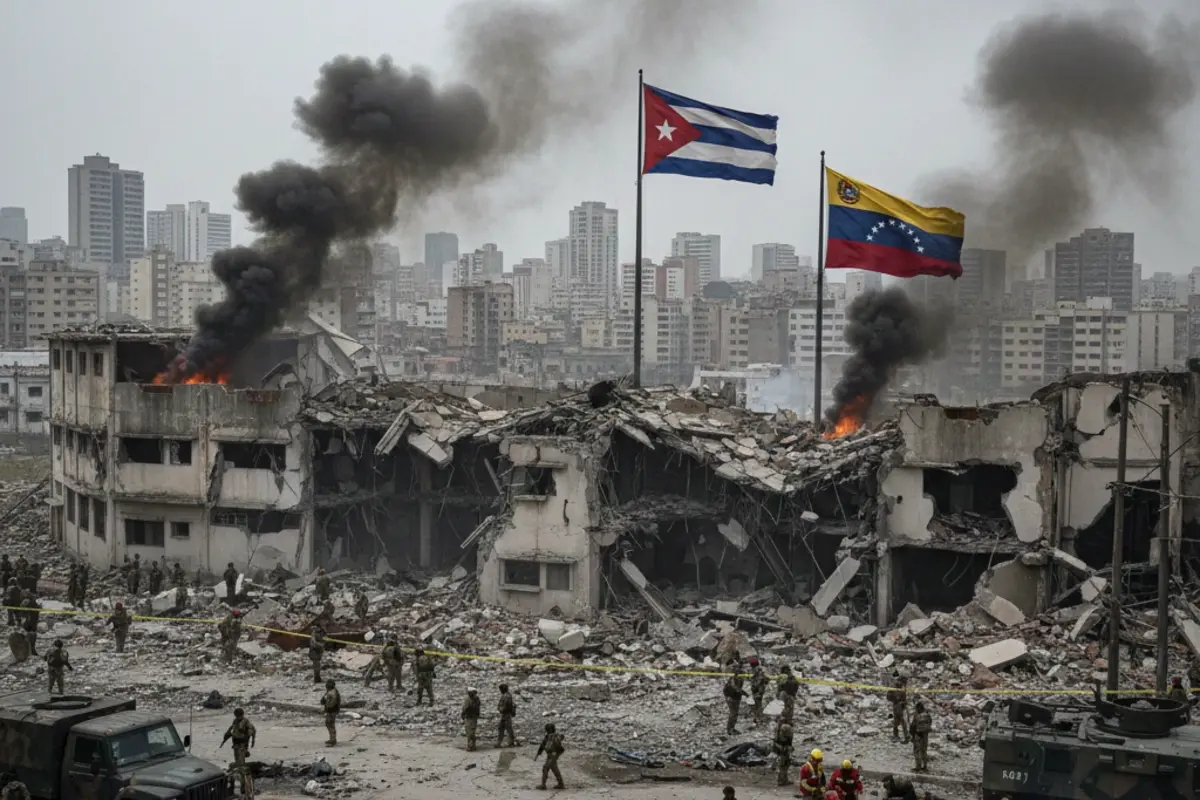
The U.S. operation took place in Caracas, Venezuela’s capital. American forces launched air and ground strikes against a compound used by President Maduro. The operation ended with Maduro and his wife captured and removed from the country.
During the raid, heavy fighting broke out. Explosions were reported in and around the compound. Buildings were damaged, and several security units were hit.
Cuba later announced that 32 of its citizens were killed during this operation. The Cuban government said these individuals fought back during the attack and died during direct combat or air strikes.
Venezuela has not released an official death toll. However, reports suggest the number of casualties may be much higher and could still rise.
Who Were the Cuban Nationals Killed
According to Havana, the Cubans killed were not civilians. They were members of Cuba’s military and intelligence services. The Cuban government did not provide names or ranks but described them as professionals on official duty.
President Miguel Díaz-Canel said the Cubans were in Venezuela at the request of the Venezuelan government. Their role was to provide security and protection to President Maduro and his wife.
Cuba and Venezuela have a long-standing alliance. For years, Cuba has sent security advisors and intelligence personnel to Venezuela. In return, Venezuela has supplied Cuba with oil and economic support.
The Cuban government said its personnel acted with courage and resisted the attackers until the end.
Cuba Declares National Mourning
Following the announcement, Cuba declared two days of national mourning. Flags were lowered across the country. State media broadcast tributes to the fallen personnel.
In an official statement, the Cuban government said the dead fulfilled their duty with dignity. The statement described fierce resistance against attackers and bombings at security facilities.
Public events were canceled. Schools and offices observed moments of silence. The mood across the country was somber and tense.
This response shows how seriously Cuba views the incident. It also signals that Havana sees the deaths as an attack on the Cuban state itself.
Why Cuban Forces Were in Venezuela
Cuba and Venezuela have shared close ties for decades. The relationship grew stronger after Hugo Chávez came to power in Venezuela. Since then, Cuba has provided security, intelligence, and advisory support.
Cuban personnel often help protect senior Venezuelan leaders. They also assist in intelligence gathering and internal security operations.
In exchange, Venezuela has supplied Cuba with oil, fuel, and financial aid. This arrangement has helped Cuba cope with economic hardship and international sanctions.
The presence of Cuban forces in Venezuela is not new. However, their deaths during a U.S. military operation marks a major escalation.
Cuba’s Official Reaction
Cuban leaders strongly condemned the U.S. operation. They described it as aggression and a violation of international law. Officials accused Washington of attacking allied forces inside a sovereign nation.
President Díaz-Canel said Cuba would honor its fallen personnel and stand firm against foreign pressure. He also warned that such actions threaten regional peace.
Cuban officials avoided calling for direct military retaliation. However, their language suggested deep anger and concern.
The government framed the deaths as part of a broader struggle against U.S. interference in Latin America.
Venezuela’s Response So Far
Venezuela has not confirmed how many people were killed during the raid. Officials have focused on condemning the U.S. operation and demanding the return of President Maduro.
Venezuelan leaders thanked Cuba for its support. They praised the Cuban personnel who died while protecting their president.
The interim leadership in Venezuela described the attack as an illegal invasion. They accused the U.S. of violating sovereignty and causing unnecessary bloodshed.
Public protests have taken place in parts of Venezuela. Many citizens expressed anger over foreign military action on Venezuelan soil.
US Statements and Position
The United States has acknowledged the operation but has not commented directly on the Cuban deaths. Officials have focused on the capture of Maduro and the stated goal of ending drug trafficking.
President Donald Trump said military action against Cuba would not be needed. He claimed Cuba was already weak and facing internal problems.
Trump said Cuba was “ready to fall” and suggested pressure, not force, would bring change.
US Secretary of State Marco Rubio used harsh language toward Cuba. He called the Cuban leadership incompetent and warned officials in Havana to be concerned.
These statements have added to tensions and fears of further escalation.
Concerns About a Wider Conflict
After the Cuban deaths, analysts began asking whether Cuba could become a future target. The idea of a similar U.S. operation against Cuba has raised alarm across the region.
Cuba has faced decades of U.S. sanctions and political hostility. Any direct military action would mark a historic shift.
So far, the U.S. has said it has no plans for military action against Cuba. Still, the tone of recent statements has kept fears alive.
Regional leaders worry that conflict could spread beyond Venezuela if diplomacy fails.
US Sanctions and the Cuba Blockade
The U.S. has enforced an economic embargo against Cuba since 1962. The blockade limits trade, travel, and financial transactions.
Over the years, international groups have called for the embargo to end. The United Nations has repeatedly criticized it.
Under Trump’s leadership, restrictions on Cuba have increased. New rules target Cuban military and intelligence agencies. Travel rules for Americans have also tightened.
US officials say these measures aim to pressure the Cuban government. Critics argue they harm ordinary Cuban citizens instead.
The deaths of Cuban personnel now add a new layer to this long-running dispute.
International Reactions
Several countries expressed concern after Cuba’s announcement. Allies of Cuba and Venezuela called for calm and restraint.
Some leaders warned that foreign military actions risk destabilizing the region. Others stressed the need to respect sovereignty and international law.
The United Nations is expected to discuss the issue. Diplomatic efforts may increase to prevent further bloodshed.
China and Iran have already called for restraint and for the release of detained leaders in the region.
Impact on Latin America
Latin America has a long history of foreign intervention. Many nations view the Venezuela crisis through that lens.
The deaths of Cuban personnel have stirred memories of past conflicts. Leaders fear renewed instability and division.
Some countries support the U.S. stance against Maduro. Others oppose any military action.
This divide could weaken regional cooperation and trust.
The Human Cost of the Conflict
Beyond politics, the human cost is growing. Families in Cuba mourn loved ones lost far from home. Venezuelan civilians face fear and uncertainty.
Reports suggest homes and infrastructure were damaged during the raid. Power outages and shortages followed in some areas.
Each new development adds pressure to already struggling populations.
What Happens Next
Several paths lie ahead.
Diplomatic talks may increase. International mediators could step in. Pressure may grow on the U.S. to explain its actions.
Cuba may seek justice through global forums. Venezuela will likely push for Maduro’s return.
The risk of further clashes remains if tensions rise.
Much depends on how leaders choose to act in the coming days.