 By
By The evolution of blockchain technology has always been tied closely to the concepts of decentralization, transparency, and user empowerment. Yet one challenge has consistently followed every major blockchain project: verifying identity at scale. The Pi Network, one of the world’s fastest-growing digital ecosystems, recognized early on that its mission to build a globally inclusive cryptocurrency required more than traditional verification models. It required an identity system that was secure, fast, globally accessible, and resistant to fraud—without compromising user privacy or decentralization.
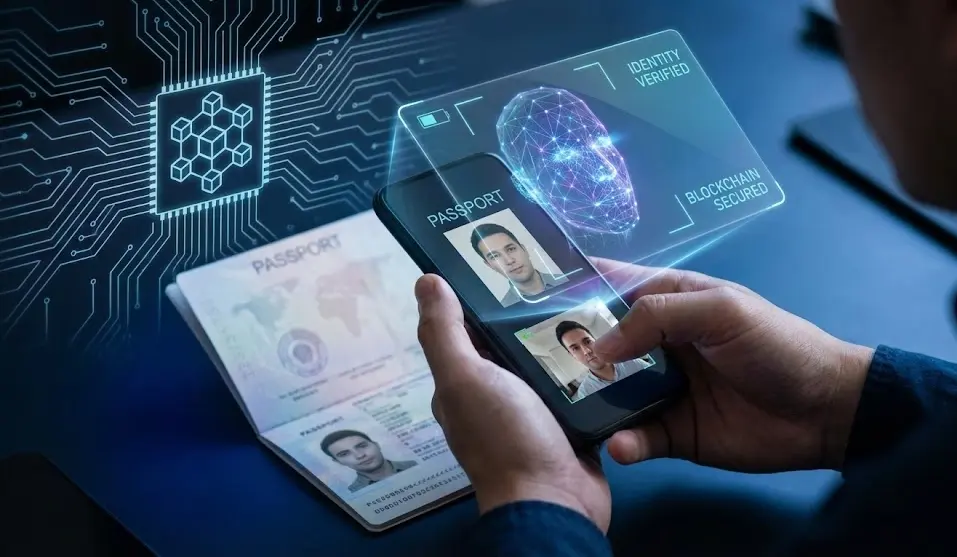
This need led to the development of Pi KYC, a Know Your Customer framework designed specifically for a massive, diverse global community. However, the real breakthrough came when Pi introduced AI-powered processing, automating verification and dramatically accelerating approval times. As artificial intelligence integrates deeper into the Pi KYC system, the project is shaping a new global standard for digital identity verification—one that could impact not only Pi users but the future of Web3 onboarding.
In this in-depth analysis, we explore what Pi KYC AI Integration means, how it works, why it matters, and what it reveals about the future of decentralized digital identity.
Understanding the Pi Network’s Vision for KYC
The Pi Network has always aimed to create a cryptocurrency that could be mined by everyone with a mobile phone. This democratized approach resulted in millions of global users—miners, pioneers, and developers joining the Pi movement. However, the network’s long-term vision depends on having real, verified human users, not bots or duplicated accounts.
Traditional KYC processes involve manual review, lengthy waiting times, and systems that often exclude users from developing countries due to documentation issues or access limitations. Pi Network sought to redesign this model entirely.
Pi’s KYC system is built around three core pillars:
-
Scalability – Being able to verify millions of users worldwide.
-
Accuracy – Ensuring the person behind the account is real and unique.
-
Inclusivity – Making verification possible even for users in remote or underbanked areas.
These pillars became the foundation for Pi’s AI-powered KYC solution, one of the most ambitious identity verification systems ever released in a decentralized ecosystem.
What Makes Pi KYC Different from Traditional KYC?
Pi’s identity verification solution differs from mainstream models used by banks or exchanges. While traditional systems rely heavily on third-party verification providers, Pi’s approach blends community validation with artificial intelligence, creating a hybrid system that is both decentralized and highly efficient.
Pi KYC uses:
-
AI document scanning
-
AI facial matching and liveness detection
-
Automated data extraction
-
Risk pattern detection
-
AI-assisted review and flagging
-
Human-level validation only where needed
Instead of outsourcing verification, Pi developed an internal KYC algorithm, reducing dependency on centralized institutions and giving users more control over their identity data.
This approach, combined with mass AI integration, has allowed the network to process KYC applications at unprecedented speed.
How AI Integration Transforms Pi KYC
AI is the engine driving Pi’s modern verification system. It not only automates repetitive tasks but enhances accuracy, reduces fraud risk, and enables faster onboarding.
Here is how AI plays a pivotal role:
1. AI-Powered Document Recognition
The system can instantly read and analyze:
-
Passports
-
National ID cards
-
Driver’s licenses
-
Government-issued documents
AI extracts essential information like names, birthdates, and ID numbers even from low-resolution images. This removes the need for manual entry, reducing human error and user friction.
2. AI Facial Recognition & Liveness Testing
AI compares the user’s selfie with their ID photo using:
-
Facial geometry
-
Landmark mapping
-
Pixel-level pattern matching
-
Motion-based liveness cues
The liveness test ensures the person is physically present, blocking deepfakes, recorded videos, or photo spoofing.
3. Fraud & Duplicate Account Detection
AI can detect irregularities such as:
-
Same face using different IDs
-
Repeated addresses or patterns
-
Document tampering
-
Photo manipulation
-
Altered text fields
This ability strengthens Pi’s mission of maintaining one account per real human being.
4. Automated Case Routing
Not all cases require human review. AI categorizes verifications into:
-
Automatically approvable
-
Needs partial human validation
-
High-risk requiring deeper review
This triage system prevents bottlenecks and ensures faster approval for compliant users.
5. AI-Based Data Security
Pi’s AI tools do not centralize personal data. Instead, they use encrypted, permission-based architecture that respects privacy while ensuring accuracy.
AI helps to anonymize sensitive fields during processing, meaning personal information is never exposed unnecessarily.
Why Pi KYC AI Integration Is Trending Worldwide
The global excitement around Pi’s KYC transformation stems from its potential impact on:
1. Global Web3 Adoption
Most blockchain networks struggle to onboard real users at scale. AI has allowed Pi to verify millions of people, making it one of the largest KYC projects in Web3 history.
2. Financial Inclusion
AI allows Pi to accept documents from:
-
Rural communities
-
Developing nations
-
Remote areas
This democratizes access to digital currency in ways traditional institutions cannot match.
3. User Trust & Security
AI-driven accuracy reduces fraud, strengthening the integrity of the entire Pi ecosystem. Genuine users feel protected knowing the network is safeguarded against bots and duplicates.
4. Speed & Efficiency
Early Pi KYC waves took weeks or months. AI-driven KYC takes minutes or hours in many cases, making onboarding seamless.
5. A New Benchmark in Blockchain Identity
Pi’s dual AI + human validation approach may influence future crypto exchanges, wallets, and decentralized applications.
The Role of Community Validators in the AI Era
While AI performs most of the technical heavy lifting, human validators remain part of the system. Their role has shifted from manual document reading to reviewing AI-flagged cases, ensuring the system remains:
-
Transparent
-
Accurate
-
Bias-free
Pi’s unique hybrid identity model creates a balance where technology accelerates the process, and humans ensure fairness.
The Future of Pi KYC AI Integration
As the Pi ecosystem matures, AI will continue to evolve. Several future-facing enhancements are expected:
1. Full AI-Driven KYC Approval
As AI accuracy improves, 90–95% of cases may be auto-approved.
2. Biometric-Based Login
Users could authenticate accounts using facial recognition or fingerprint scanning.
3. AI Anti-Fraud Scanning for In-App Transfers
Pi transactions may soon include optional identity checks for large or suspicious transfers.
4. Global Digital Identity Layer
Pi may evolve into a privacy-preserving, blockchain-secured digital ID system applicable beyond the Pi network.
5. AI-Assisted Business Verification
Merchants in the Pi ecosystem may need automated KYC/KYB to join the marketplace.
Challenges and Ethical Considerations
AI-powered KYC is powerful but requires careful implementation. Pi must continue addressing:
-
Privacy concerns
-
Dataset fairness
-
Avoiding algorithmic bias
-
Transparent user communication
The network’s decentralized philosophy means user trust must remain a top priority.
Conclusion: Pi KYC AI Integration Is Setting a New Standard for Web3 Identity
The integration of artificial intelligence into Pi’s KYC system represents one of the most important developments for the network and potentially for the entire blockchain industry. This breakthrough allows millions of global users to verify their identity quickly, securely, and inclusively—something no other blockchain ecosystem has achieved at this scale.
Pi’s vision goes beyond mining. It aims to build a digital economy grounded in trust and accessible to everyone. AI-powered KYC is a major step toward that future.
As the Pi Network moves closer to Open Mainnet, the ability to verify real users at scale may become the foundation that makes Pi one of the first truly global, people-powered cryptocurrencies.