 By
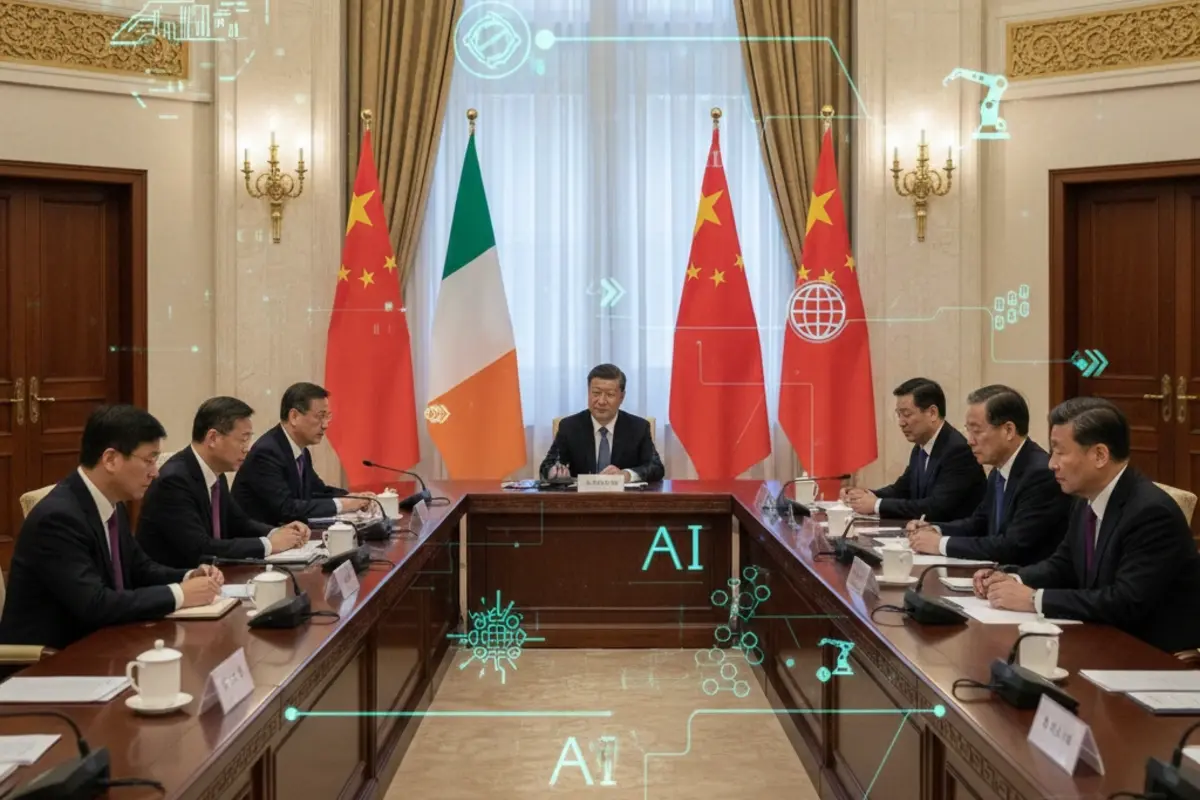
By Ireland has taken a significant step on the global stage as Taoiseach Micheál Martin embarks on a major trade and technology diplomacy visit to China, signalling a renewed commitment to strengthening bilateral relations. The visit focuses heavily on technology, artificial intelligence (AI), digital innovation, and economic cooperation, placing Ireland at the centre of evolving global tech partnerships.
This high-profile engagement comes at a time when countries worldwide are reassessing alliances, diversifying trade relationships, and investing heavily in emerging technologies. For Ireland, deepening ties with China represents both an economic opportunity and a strategic diplomatic move with long-term implications for trade, innovation, and global influence.
Historical Context of Ireland–China Relations
Ireland and China formally established diplomatic relations in the late 1970s. Over the decades, cooperation between the two nations has steadily expanded from modest trade links into a broad partnership covering education, culture, agriculture, pharmaceuticals, and technology.
A major milestone came when both countries elevated their relationship to a strategic partnership, paving the way for deeper engagement. Despite this progress, high-level visits have been relatively infrequent in recent years, making the current visit particularly significant.
Ireland’s position as a member of the European Union gives it additional strategic value, allowing it to act as a bridge between Chinese markets and European regulatory frameworks. This unique position has helped Ireland attract investment and maintain relevance in global economic discussions.
The 2026 Diplomatic Visit: Objectives and Significance
Taoiseach Micheál Martin’s visit to China is widely viewed as one of the most important diplomatic engagements of his leadership. The agenda includes meetings with senior Chinese officials, discussions on trade expansion, and in-depth talks on future collaboration in advanced technologies.
Central to the visit is the shared ambition to expand pragmatic cooperation, strengthen political trust, and explore new growth opportunities. Both sides have emphasised dialogue, mutual respect, and economic collaboration as the foundation of the relationship.
The visit also demonstrates Ireland’s commitment to open trade, multilateral cooperation, and constructive engagement with global economic powers.
Technology and Artificial Intelligence at the Core
Why AI Matters in This Partnership
Artificial intelligence has emerged as a defining force in global economic and technological development. China is investing heavily in AI research, industrial automation, and digital infrastructure, while Ireland has established itself as a European technology hub hosting some of the world’s largest tech companies.
This convergence creates a natural platform for collaboration. Ireland offers a skilled workforce, strong academic institutions, and access to EU markets, while China brings scale, investment capacity, and rapidly advancing technological capabilities.
Together, these strengths position both countries to play a leading role in shaping the future of AI and digital innovation.
Potential Areas of AI and Tech Collaboration
The discussions between Irish and Chinese leaders have highlighted several promising areas for cooperation:
- Joint research initiatives in artificial intelligence and machine learning
- Collaboration on ethical AI development and governance frameworks
- Investment in digital infrastructure and cloud technologies
- Partnerships between universities and research institutions
- AI applications in healthcare, finance, agriculture, and smart cities
Such initiatives could significantly boost Ireland’s standing as a global AI hub while allowing Chinese firms to collaborate within European regulatory environments.
Economic and Trade Cooperation Beyond Technology
While AI and digital innovation are central themes, the visit also covers broader economic cooperation across multiple sectors.
Agriculture and Food Exports
Ireland’s agriculture sector stands to benefit from stronger access to Chinese markets. High-quality Irish dairy, beef, seafood, and food products are increasingly popular in China, and improved trade ties could enhance export volumes and rural economic growth.
Pharmaceuticals and Life Sciences
Ireland is a global leader in pharmaceutical manufacturing and medical technology. Collaboration with Chinese partners in research, production, and distribution could unlock new opportunities for innovation and market expansion.
Education and Talent Exchange
Education has long been a cornerstone of Ireland–China relations. Expanding student exchange programs, joint research initiatives, and academic partnerships can foster long-term collaboration and cultural understanding while building a future-ready workforce.
Ireland’s Strategic Role in China–EU Relations
Ireland’s engagement with China takes place within a broader European context. As a committed EU member, Ireland must balance bilateral cooperation with collective European policy frameworks.
However, Ireland’s reputation as a pragmatic, open economy gives it a unique role in facilitating constructive dialogue between China and the European Union. By promoting cooperation rather than confrontation, Ireland can help stabilise trade relations and encourage mutually beneficial outcomes.
This role is expected to grow even more important as Ireland prepares to take on increased responsibilities within EU leadership structures.
Political and Diplomatic Considerations
During the visit, Irish leadership reaffirmed its commitment to established diplomatic principles, including respect for international law, multilateralism, and peaceful cooperation. The discussions also addressed global challenges such as climate change, economic stability, and technological governance.
Both sides highlighted the importance of dialogue in addressing international issues and maintaining global stability. These conversations underscore that the partnership extends beyond commerce into shared responsibility for global development.
Economic Impact for Ireland
Opportunities for Growth
Strengthening ties with China could bring substantial economic benefits to Ireland, including:
- Increased foreign direct investment
- Job creation in technology and manufacturing sectors
- Expanded export markets
- Enhanced research and innovation capacity
By positioning itself as a trusted partner, Ireland can attract long-term investment aligned with national economic goals.
Challenges and Risk Management
Despite the opportunities, the partnership also presents challenges. Ireland must ensure that cooperation aligns with EU regulations, data protection standards, and national security considerations.
Balancing economic opportunity with regulatory compliance and geopolitical sensitivity will be crucial to sustaining long-term benefits.
Long-Term Strategic Implications
This visit marks more than a single diplomatic event — it represents a strategic recalibration of Ireland’s global engagement. As technology reshapes economies, Ireland’s proactive approach to international collaboration could define its role in the next phase of global growth.
If managed effectively, the Ireland–China partnership could enhance innovation, strengthen economic resilience, and elevate Ireland’s influence in global technology governance.
Conclusion: A Defining Moment for Ireland’s Global Strategy
Taoiseach Micheál Martin’s visit to China signals a bold and forward-looking vision for Ireland’s future. By prioritising technology, artificial intelligence, and trade cooperation, Ireland is positioning itself as a dynamic global partner ready to engage with the world’s largest economies.
The outcomes of this visit have the potential to shape Ireland’s economic trajectory, strengthen its innovation ecosystem, and influence international diplomacy for years to come. As global competition intensifies, strategic partnerships such as this will play a decisive role in defining success.