 By
By Ireland’s national museums protect famous objects from the past. These include royal artefacts, ancient tools, and important documents. Yet many powerful stories live in smaller regional museums.
These museums hold personal items connected to real lives. They show moments of joy, loss, family life, and memory. One such place is the Museum of Hidden History in Clonmel, County Tipperary.
Visitors often leave this museum deeply moved. One exhibit, in particular, tells the story of an eleven-year-old girl whose belongings survived for over a century.
This article explores the museum, the story behind its most touching exhibit, and why local museums matter in modern Ireland.
The Role of Regional Museums in Ireland
Regional museums protect local identity. They collect objects connected to towns, families, and communities.
Large museums often focus on national events. Smaller museums focus on people.
These places preserve everyday history. They help people understand how earlier generations lived.
Visitors often find these collections easier to relate to. Personal stories feel closer than political history.
Ireland has many county museums that protect local memory. These museums rely on donations from families and communities.
Without these collections, many stories would disappear.
The Museum of Hidden History in Clonmel
The Museum of Hidden History sits in Clonmel, County Tipperary. It focuses on social history through personal artefacts.
The museum collects objects that belonged to ordinary people. Each display tells a story about life in Tipperary.
Visitors often describe the museum as emotional and thoughtful. The exhibits are simple but powerful.
Instead of large displays, the museum presents carefully preserved items. These objects speak for themselves.
One exhibit stands out above the rest. It tells the story of Dorothy May Petronell Grubb.
A Childhood Remembered: Dorothy May Petronell Grubb
Dorothy May Petronell Grubb was born into a wealthy Quaker family in Tipperary. She lived with her parents near Cashel.
Her family home stood in Ardmayle. She had three older brothers who studied in England.
Petronell lived a comfortable life. She had a governess and many household staff. Her days included lessons, sewing, and play.
In 1919, the family travelled to Killarney for a holiday. During the trip, Petronell became sick with typhoid.
Within one week, she died.
She was only eleven years old.
Her death shocked the family and local community.
A Mother’s Memory Box
After Petronell died, her mother gathered her belongings. She placed them carefully in a box.
This box remained in family care for many decades.
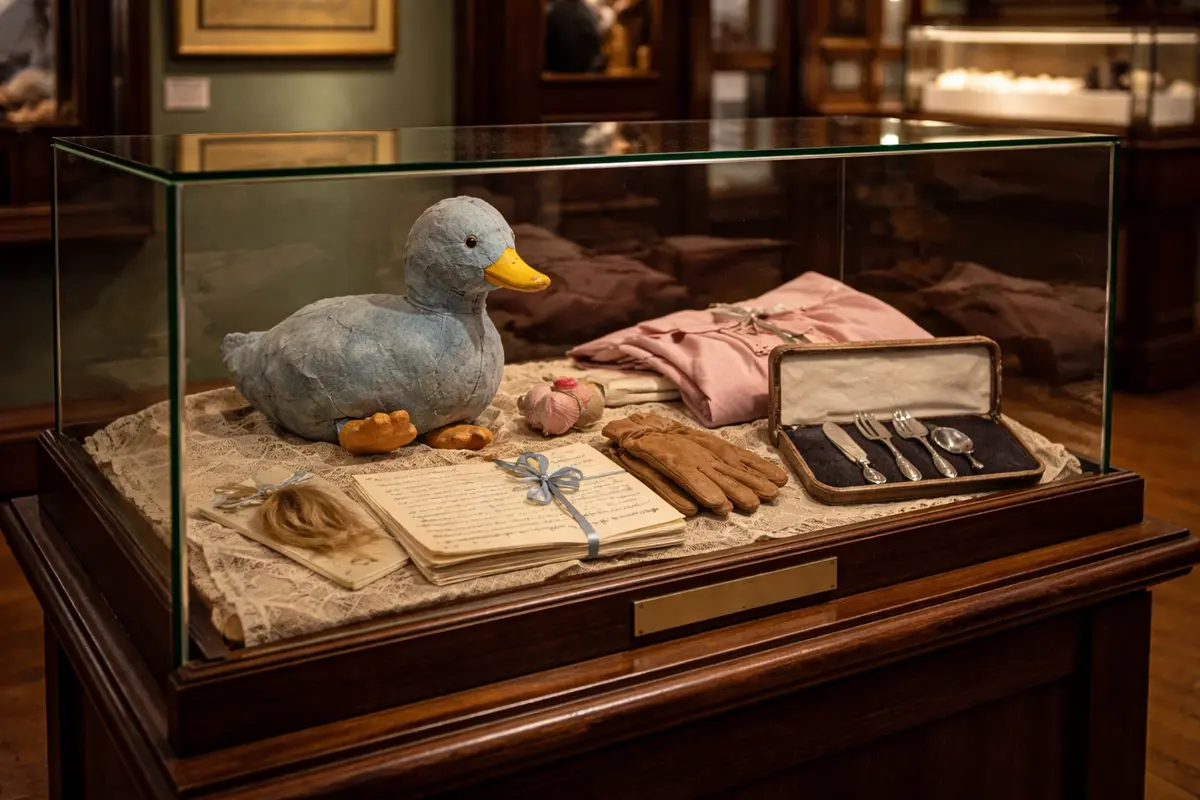
Inside were objects from Petronell’s daily life. These items later became one of the museum’s most important displays.
The collection includes:
- A soft blue toy duck
- A silver cutlery set for a child
- Leather gloves from London
- Homework pages
- Sewing work in progress
- A lock of her hair tied with ribbon
These simple items tell a powerful story. They show childhood frozen in time.
The collection was donated to the museum in 2019 by family descendants.
Life in an Irish Upper-Class Household
The 1911 census shows details about the Grubb household. Fourteen people lived in the home.
The household included many workers. These included a butler, nurse, governess, cook, and housemaids.
Gardeners and drivers worked outside the house.
This shows the structure of wealthy Irish households before independence.
Petronell’s belongings reflect this lifestyle. Her sewing lessons and homework show formal education at home.
Her gloves from London show travel and wealth.
These items help historians understand daily life during that period.
The Power of Personal Objects
Museums often display large historical items. Yet small personal objects can carry deeper emotion.
A toy, a piece of clothing, or schoolwork can feel familiar across time.
Visitors often imagine the child who owned these items.
Petronell’s display creates a strong emotional response. Many visitors pause quietly when viewing the collection.
This connection shows why personal artefacts matter.
They turn history into human experience.
Burial and Remembrance
Petronell was buried at Ardmayle church. She was carried there in a hay cart covered with flowers.
Her grave stands near the church entrance today.
A white marble cross marks the burial place.
Her family planted daffodil bulbs spelling her name. Each spring, the flowers bloom again.
This living memorial shows lasting love and remembrance.
Memory can survive through small acts like planting flowers.
Museums as Keepers of Memory
Museums protect objects, but they also protect emotion.
Regional museums play an important role in preserving community history.
They remind people that history is made of individual lives.
The Museum of Hidden History shows how one child’s belongings can tell a story across generations.
Visitors often leave thinking about family, memory, and time.
This is the strength of local museums.
They preserve stories that might otherwise be forgotten.
Social History and Storytelling
Social history focuses on everyday life. It studies how people lived, learned, worked, and remembered.
Petronell’s belongings provide insight into childhood in early twentieth-century Ireland.
They show education, family care, and grief.
Objects can tell stories without words.
Museums help people see history through real lives.
This approach makes history easier to understand.
Preserving Family Collections
Many families hold old letters, toys, and photographs. These items may seem small but carry deep meaning.
Museums depend on families who donate such collections.
Without donations, many stories would be lost.
The Grubb family preserved Petronell’s belongings for one hundred years. Their care allowed the story to survive.
This shows how families and museums work together to protect history.
Visiting Regional Museums in Ireland
Regional museums exist across Ireland. They often sit in small towns and historic buildings.
These museums offer quiet learning experiences.
Visitors can spend time reflecting rather than rushing through galleries.
Local museums also support tourism and education.
They connect communities with their past.
The Museum of Hidden History is a strong example of this role.
Why This Story Matters Today
Modern life moves quickly. Personal history can be forgotten.
Museums help people slow down and remember.
Petronell’s story reminds visitors of childhood, family love, and loss.
It shows how memory can survive through objects.
The exhibit connects the past with the present.
That connection is why regional museums remain important today.
Cultural Tourism and Local Heritage
Cultural tourism continues to grow in Ireland. Visitors often seek authentic experiences.
Regional museums provide these experiences.
They offer stories tied to real places and people.
Clonmel benefits from visitors who come to see the museum.
This supports local culture and economy.
Preserving heritage also builds community pride.
Education Through Museums
Museums help students understand history in a personal way.
Seeing real objects creates stronger learning experiences.
Petronell’s display helps young visitors understand life in 1919.
It also teaches empathy and reflection.
Education through museums goes beyond textbooks.
Objects make history real.
The Future of Local Museums
Regional museums face challenges. Funding and space can be limited.
Yet their value continues to grow.
Communities now recognise the importance of preserving local stories.
Digital archiving also helps museums protect collections.
The Museum of Hidden History shows how small museums can create lasting impact.
Its exhibits prove that personal stories matter.
Conclusion
The Museum of Hidden History in Clonmel preserves more than artefacts. It preserves memory.
The story of Dorothy May Petronell Grubb reminds visitors how fragile life can be. Her belongings show childhood, love, and loss across time.
Regional museums protect stories that national collections cannot hold.
They remind us that history lives in families, homes, and communities.
Small objects can carry the weight of memory for generations.
That is why local museums remain essential today.