 By
By The Revenue Commissioners are reviewing how Local Property Tax (LPT) should apply to modular homes and garden dwellings as more homeowners choose these types of housing. Internal discussions show officials are seeking clearer guidance because existing rules do not directly address many modern modular buildings.
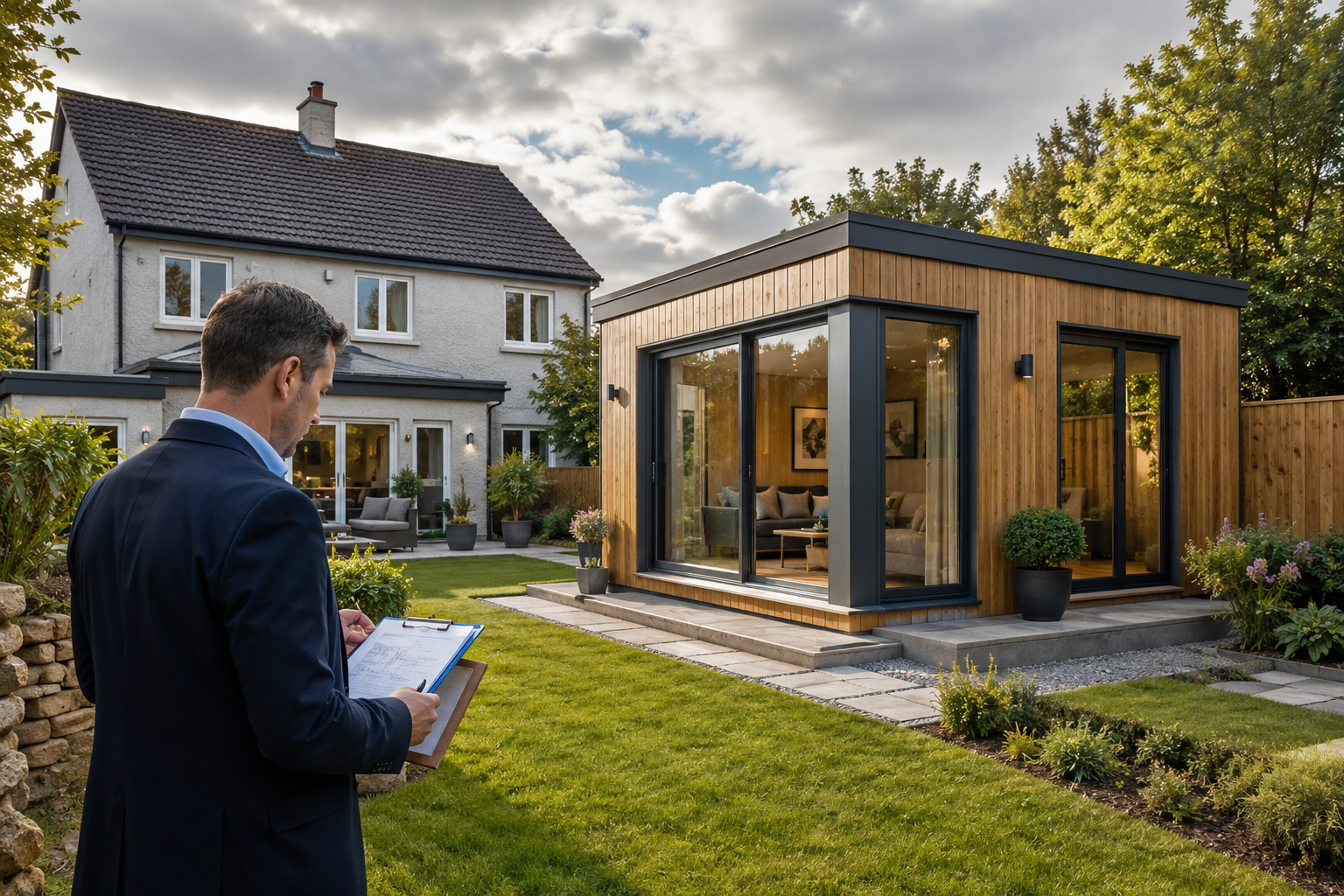
Demand for modular homes has grown across Ireland due to rising housing costs and limited supply. At the same time, the Government plans to relax planning rules for certain garden homes of up to 45 square metres, making these properties more common in residential areas.
According to internal Revenue discussions, there is uncertainty over whether some modular homes should be treated as residential properties for Local Property Tax purposes. The main issue is whether a structure is considered permanently attached to the ground, as this is one of the key legal tests under current legislation.
Revenue has noted that some structures, even when used as living spaces, are generally excluded from Local Property Tax. Examples include mobile homes, caravans, camper vans, houseboats, and shipping containers used as accommodation where they are not permanently fixed in place.
Modular homes present a more complex situation. While many are manufactured off-site, they can be installed on permanent foundations and connected to utilities like any traditional home. Revenue officials acknowledged that these buildings have a degree of permanence, creating uncertainty about how existing tax rules should apply.
Internal correspondence also highlighted that there is no published guidance dealing specifically with modular homes. Officials recognised that the current wording can be difficult to interpret and that there is no court decision providing a definitive legal answer.
Revenue referred to one case in which a property owner argued that a prefabricated home should not be liable for Local Property Tax. Officials rejected that view after determining the building was being used as the owner’s main residence. Revenue maintained that the responsibility rested with the taxpayer to demonstrate why the property should be excluded.
In communications with the Department of Finance, Revenue indicated that each case must be assessed on its own facts and circumstances. Factors such as the building’s construction, permanence, intended use, and connection to the ground may all influence whether Local Property Tax applies.
A Revenue spokesperson said the legislation applies to any building that is used as, or suitable for use as, a dwelling. The law excludes structures that are not permanently attached to the ground, but separate buildings that are fixed in place and capable of being occupied as homes may qualify as residential properties in their own right.
Revenue also reminded homeowners that garages, greenhouses, and other permanent structures on a property should be considered when assessing the overall value of a home for Local Property Tax purposes.
Where a modular home is permanently attached to the ground and functions as a separate dwelling, it may attract its own Local Property Tax liability. As Local Property Tax is a self-assessed system, property owners are responsible for applying the legislation correctly based on the individual characteristics of their property.
As modular housing continues to expand across Ireland, many homeowners, builders, and tax professionals are expected to seek clearer public guidance. More detailed rules could help reduce uncertainty and ensure consistent treatment of modern housing developments under Ireland’s Local Property Tax system.