 By
By US-Iran conflict, Strait of Hormuz attacks, oil tanker strikes, Middle East tensions
Global tensions have risen after fresh fighting between the United States and Iran. The conflict began after attacks on oil tankers in the Strait of Hormuz. This key waterway handles a large share of global oil trade. Any disruption here affects energy markets worldwide.
The United States responded with strong military action. Iran then launched strikes of its own. The situation has raised fears of a wider conflict in the Gulf region.
This article explains what happened, why it matters, and what could come next.
What Happened in the Strait of Hormuz?
The Strait of Hormuz is one of the most important shipping routes in the world. It connects the Persian Gulf to the open ocean. Around one-fifth of global oil passes through this narrow channel.
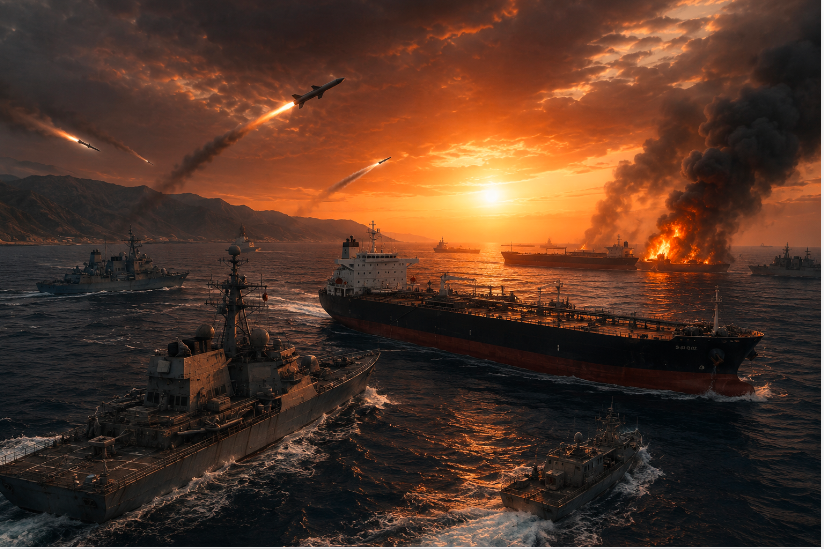
Recently, three oil tankers were attacked in this area. The ships were damaged, and crews were put at risk. The United States blamed Iran for the attacks. Iran has not directly claimed responsibility.
These attacks triggered a rapid military response from the US.
US Launches Strikes on Iranian Targets
US Central Command confirmed it carried out strikes on more than 80 targets. These included missile sites, command centers, and naval assets.
The US said the strikes were meant to punish Iran for attacking commercial ships. Officials described the action as necessary to protect global shipping.
The strikes hit areas such as Qeshm Island, Bandar Abbas, and Sirik. Iranian media reported injuries from shrapnel in these regions.
The US also targeted small boats believed to be used in the tanker attacks.
Iran Responds With Missile and Drone Attacks
Iran quickly responded to the US strikes. The Islamic Revolutionary Guard Corps said it launched missiles and drones at US military sites.
Targets included bases in Bahrain and Kuwait. Iran claimed it hit 85 key facilities. These included a US Navy headquarters and an air base.
Kuwait condemned the attacks and called them repeated violations. The strikes raised fears of a wider regional conflict.
Iran said its actions were in response to US aggression.
Rising Tensions Between the US and Iran
Tensions between the US and Iran have been high for years. The two countries have clashed over nuclear programs, sanctions, and regional influence.
Last month, both sides signed a memorandum of understanding. This deal aimed to reduce tensions and ease sanctions.
However, recent events have put that agreement at risk.
Iran accused the US of breaking the deal. Officials said the US violated terms by launching strikes and restoring oil sanctions.
NATO Reaction to the Conflict
NATO Secretary General Mark Rutte supported the US actions. He said the strikes were necessary.
Rutte argued that Iran had violated the ceasefire by allowing attacks on ships. He stressed the need for a strong response.
His comments came during a NATO summit in Ankara, Turkey.
The alliance is closely watching the situation. Any escalation could affect global security.
Why the Strait of Hormuz Matters
The Strait of Hormuz is vital for global energy supply. Around 20% of the world’s oil passes through it daily.
Any disruption can cause oil prices to rise. It can also affect shipping routes and global trade.
Countries around the world depend on stable access to this route.
Here is a quick overview:
| Key Factor | Details |
|---|---|
| Location | Between Iran and Oman |
| Oil Flow | About 20% of global supply |
| Importance | Critical for energy trade |
| Risk | High due to regional tensions |
| Impact | Affects oil prices worldwide |
Impact on Global Oil Markets
The attacks and strikes have already affected oil prices. Markets reacted quickly to the news.
Prices rose due to fears of supply disruption. Traders worry that further conflict could block the strait.
Shipping companies are also on alert. Insurance costs for tankers may increase.
If tensions continue, global energy costs could rise further.
US Sanctions and Economic Pressure
Before the strikes, the US took economic action. It revoked a waiver that had eased oil sanctions on Iran.
This move increased pressure on Iran’s economy. Oil exports are a key source of income for the country.
Iran sees these sanctions as unfair and harmful.
The combination of military and economic pressure has raised tensions even more.
Iran’s Position and Statements
Iranian leaders have strongly criticized the US. Speaker Mohammad Bagher Ghalibaf accused the US of bullying.
He said Iran would not back down. He also warned that threats and pressure would not work.
Iran claims it is defending its rights and territory.
Officials say they will take decisive action if attacks continue.
Risk of Wider Conflict in the Middle East
The situation has raised fears of a larger war. The Gulf region is already tense.
Many countries have military bases in the area. Any conflict could involve multiple nations.
There is also concern about attacks on shipping and energy infrastructure.
A wider conflict could disrupt global trade and security.
Role of International Community
World leaders are calling for calm. Many countries want both sides to avoid further escalation.
Diplomatic efforts may help reduce tensions. Talks could focus on restoring agreements and easing sanctions.
However, trust between the US and Iran remains low.
Military Capabilities of Both Sides
Both the US and Iran have strong military forces.
The US has advanced technology, aircraft carriers, and global reach.
Iran has missile systems, drones, and naval units in the Gulf.
This balance makes the situation complex and risky.
Possible Future Scenarios
Several outcomes are possible:
- Continued strikes and retaliation
- Diplomatic talks and de-escalation
- Increased sanctions and economic pressure
- Wider regional conflict
The next steps depend on decisions made by both sides.
How This Affects Everyday People
While the conflict is far away for many, it still has global effects.
Higher oil prices can lead to higher fuel costs. This affects transport and goods.
Stock markets may also react to rising tensions.
Travel and shipping routes could face delays or risks.
Importance of Peace and Stability
Peace in the Gulf region is important for the world. Stable trade routes support global economies.
Conflict can lead to loss of life and economic damage.
Efforts to reduce tensions are key to avoiding further harm.
Conclusion
The recent strikes between the US and Iran mark a serious escalation. The attacks on oil tankers triggered a chain of events that could have global impact.
Both sides have shown strength and resolve. However, continued conflict could lead to wider problems.
The world is watching closely. The hope is that diplomacy can prevent further escalation.
Keywords Table
| Topic | Keywords |
| US Iran Conflict | US Iran strikes, Strait of Hormuz attack, oil tanker attack |
| Military Action | US air strikes, Iran missile attack, Gulf conflict |
| Global Impact | oil prices rise, shipping risk, Middle East tension |
| Politics | NATO response, sanctions, ceasefire violation |