 By
By Fuel and Energy Price Increases in Ireland: What You Need to Know
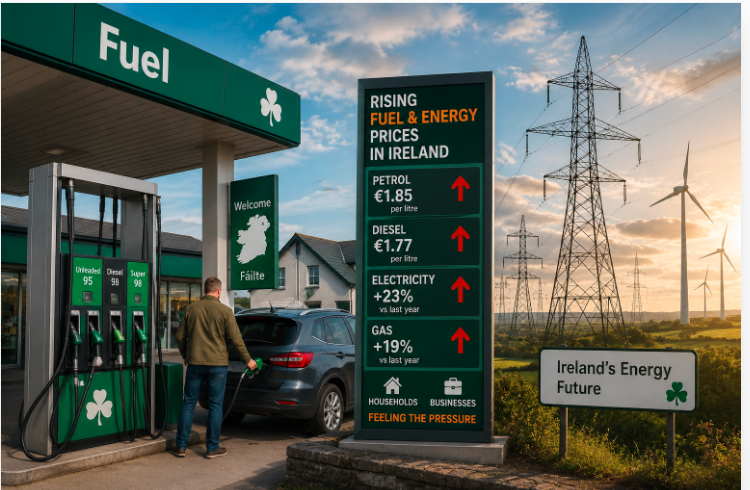
The topic of fuel and energy price increases in Ireland continues to affect households, businesses, and the wider economy. Rising electricity, natural gas, heating oil, diesel, and petrol prices have placed additional financial pressure on families across the country. While energy costs have fluctuated over recent years, many consumers continue to face higher bills than they were accustomed to before the global energy crisis.
Several factors influence energy prices, including international fuel markets, supply and demand, weather conditions, government policies, and infrastructure costs. Although wholesale prices have eased from previous record highs, many Irish households still spend a significant portion of their monthly income on energy and transport.
Understanding why fuel and energy price increases in Ireland occur can help consumers make informed financial decisions and reduce unnecessary energy costs.
Why Are Fuel and Energy Prices Increasing in Ireland?
Energy prices do not depend on one single factor. Instead, they are influenced by a combination of global and domestic issues.
One major reason is Ireland’s reliance on imported energy. The country imports much of its natural gas and petroleum products, making domestic prices sensitive to international market changes. When global oil or gas prices rise, Irish consumers usually feel the impact through higher electricity and fuel bills.
Other important factors include:
- Higher wholesale electricity and gas prices.
- Increased demand during colder months.
- Inflation affecting transport and operating costs.
- Investment in electricity infrastructure.
- Carbon taxes designed to reduce greenhouse gas emissions.
- International geopolitical events disrupting energy supplies.
These combined factors contribute to the ongoing fuel and energy price increases in Ireland experienced by households and businesses.
How Rising Energy Prices Affect Irish Households
Higher energy costs have become one of the biggest financial concerns for many Irish families.
Electricity bills have increased due to higher generation and network costs. Natural gas prices also remain above historical averages despite some market improvements.
Families are spending more on:
- Electricity.
- Home heating.
- Petrol and diesel.
- Public transport.
- Household goods affected by higher transport costs.
For lower-income households, rising energy costs may require difficult budgeting decisions, especially during winter when heating demand is highest.
Impact on Businesses
Businesses across Ireland also face increased operating expenses because of higher fuel and energy prices.
Industries with high energy consumption, including manufacturing, hospitality, retail, agriculture, and transportation, often experience the greatest challenges.
Higher operating costs may result in:
- Increased prices for customers.
- Reduced business profits.
- Delayed investments.
- Higher transportation expenses.
- Increased production costs.
Small businesses are particularly vulnerable because energy represents a larger share of their operating budgets.
Fuel Prices Across Ireland
Petrol and diesel prices change regularly depending on global crude oil markets and exchange rates.
Fuel retailers adjust prices based on:
- International oil prices.
- Refining costs.
- Distribution expenses.
- Government taxes.
- Currency exchange rates.
Motorists often notice weekly changes in pump prices as market conditions fluctuate.
Electricity and Gas Prices
Electricity generation in Ireland depends on multiple energy sources, including natural gas, wind power, hydroelectric energy, and imported electricity.
Natural gas remains an important fuel for electricity generation, meaning gas prices often influence electricity costs.
While renewable energy continues to expand, Ireland still depends heavily on imported fuels during periods when renewable generation is lower.
Investment in renewable energy aims to improve long-term energy security and reduce dependence on imported fossil fuels.
Climate Policies and Carbon Taxes
Ireland has introduced climate policies to reduce greenhouse gas emissions and encourage cleaner energy use.
Carbon taxes gradually increase the cost of fossil fuels to encourage households and businesses to adopt renewable energy and improve energy efficiency.
Although these policies support environmental goals, they can contribute to short-term increases in fuel prices.
Government support schemes are sometimes introduced to help vulnerable households manage higher energy costs.
How Consumers Can Reduce Energy Bills
Although consumers cannot control global energy markets, several practical steps can reduce household energy expenses.
Improving home insulation is one of the most effective ways to reduce heating costs.
Replacing traditional light bulbs with LED lighting lowers electricity consumption.
Using smart thermostats helps control heating more efficiently.
Switching off appliances instead of leaving them on standby reduces unnecessary electricity use.
Comparing electricity and gas suppliers may also help consumers find more competitive tariffs.
Even small daily habits can produce noticeable savings over an entire year.
The Role of Renewable Energy
Renewable energy plays an increasingly important role in Ireland’s energy future.
Wind power now supplies a significant share of Ireland’s electricity during favourable weather conditions. Solar energy installations are also growing rapidly across homes and businesses.
Benefits of renewable energy include:
- Reduced dependence on imported fuels.
- Lower carbon emissions.
- Improved long-term energy security.
- Greater price stability over time.
Continued investment in renewable technologies is expected to strengthen Ireland’s energy system in the coming years.
Facts About Fuel and Energy Prices in Ireland
Ireland imports much of its fossil fuel supply, making domestic prices sensitive to international market movements.
Electricity demand typically increases during winter because households require more heating and lighting.
Transport fuel prices can change several times each month depending on global crude oil markets.
Renewable energy continues to increase its contribution to Ireland’s electricity generation, helping diversify energy sources and improve long-term resilience.
What Can Consumers Expect in the Future?
Future fuel and energy price increases in Ireland will depend on several factors, including international fuel markets, weather conditions, renewable energy expansion, government policies, and economic growth.
While short-term price fluctuations are likely to continue, greater investment in renewable energy, improved electricity infrastructure, and enhanced energy efficiency could help reduce long-term dependence on imported fossil fuels.
Consumers should continue monitoring energy prices, reviewing supplier options, and improving home energy efficiency to minimise future costs.
Conclusion
Fuel and energy price increases in Ireland remain an important issue affecting nearly every household and business. Higher electricity, gas, petrol, diesel, and heating costs influence family budgets, business operations, and the broader economy.
Although global markets largely determine energy prices, consumers can reduce their exposure by improving energy efficiency, comparing suppliers, and investing in sustainable technologies where possible. As Ireland continues its transition towards cleaner energy, renewable power and improved infrastructure are expected to play a key role in creating a more secure and stable energy future.