

 By
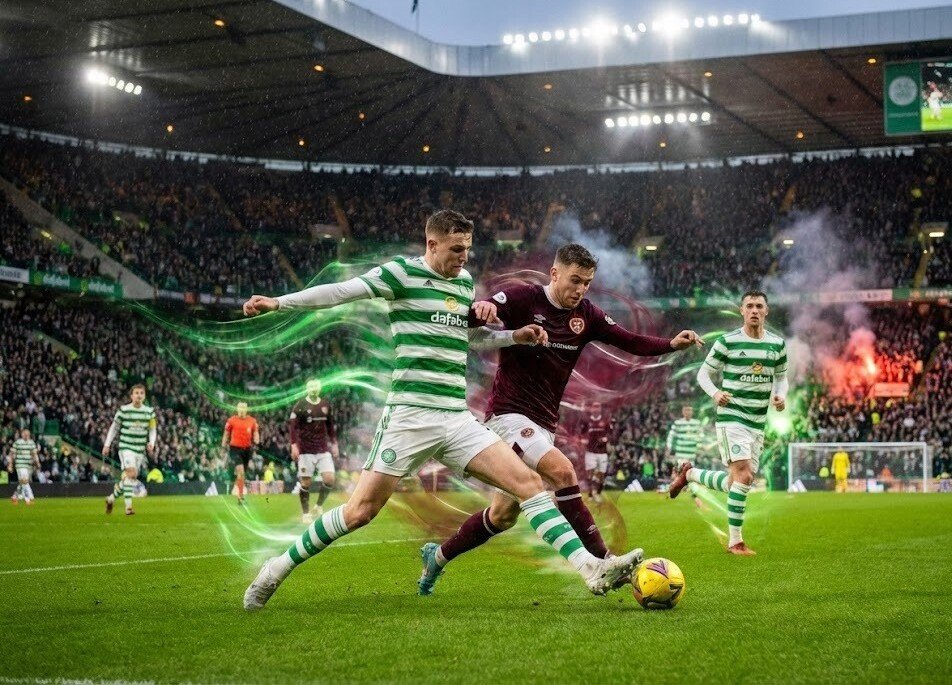
By The clash between Celtic and Heart of Midlothian has always carried historical weight, but in 2025 it has taken on new meaning. For decades the fixture was predictable, usually leaning heavily in favour of Celtic, who dominated Scottish football with consistency, depth, and reputation. Hearts, traditionally viewed as one of the stronger non-Old-Firm clubs, spent many seasons trying to bridge a gap that often felt impossible. The pattern, however, has begun to change dramatically, and this shift has placed their rivalry firmly in the spotlight.
A review of long-term results shows Celtic with a commanding majority of victories, while Hearts managed far fewer wins and a handful of draws across more than a hundred competitive meetings. This imbalance shaped the narrative for years: Celtic were favourites by default, and Hearts approached every encounter with the mindset of underdogs trying to disrupt a giant. Yet football evolves, and in 2025, Hearts are no longer approaching Celtic as fearful challengers but as genuine competitors expecting to win.
The first major turning point this year came in late October when Hearts defeated Celtic by three goals to one. It was the club’s first league victory against Celtic since early 2024, ending a frustrating run of losses and signalling a shift in confidence. The match showed a Hearts side capable not only of scoring early, but also of regaining control after setbacks and punishing Celtic’s defensive lapses. The victory also propelled Hearts upward in the league table, at one stage placing them a clear margin ahead of Celtic, which intensified pressure on the Glasgow club.
This pressure grew further with Celtic’s managerial transition. A new manager stepping in mid-season often causes tactical adjustments, rebalanced roles, and a period of adaptation for the squad. His debut match, coincidentally against Hearts, ended in a disappointing defeat. Two goals conceded from a mixture of defensive hesitation and poorly managed set pieces placed Celtic in a difficult position and gave Hearts another statement victory. Although Celtic managed a late consolation goal, it did little to disguise the issues the team faced.
These developments sparked debate among fans and media regarding whether the Scottish Premiership might be entering a period of competitive rebirth. The idea that Celtic’s domestic dominance could be challenged by a team like Hearts captured public imagination. Many supporters of the Edinburgh side started to believe that this season could mark a historic breakthrough, while Celtic supporters expressed worry about defensive instability, tactical uncertainty, and the psychological effect of uncharacteristic early-season point drops.
To understand the rivalry’s new intensity, it helps to examine both teams more closely. Hearts have enjoyed a period of tactical stability, strong leadership and favourable results. Their players appear confident, disciplined and willing to take risks in key matches. Their ability to score early, respond to setbacks and exploit set pieces has given them an edge not seen in several seasons. Their consistency has translated into resilience, especially when facing traditionally stronger opponents.
Celtic, on the other hand, have been in transition. Managerial changes, fluctuating form, injuries and unsettled defensive structures have generated unease. The club’s historical weight adds further pressure; supporters expect success, trophies and uncompromising performances. When those expectations are not met, every loss carries additional emotional impact, especially against clubs that previously posed less of a threat. The loss of points over a short run of games highlighted that the team required stability urgently.
The consequence of these narratives converging is a renewed rivalry that captivates audiences beyond Scotland. The idea of a rising club threatening established dominance is universally appealing in football. It brings unpredictability, intensity and a fresh sense of competition. Even neutral fans find themselves drawn to the drama, as underdog stories resonate across cultures and countries.
To illustrate the shifting balance, the following tables help frame the rivalry in measurable terms.
Table 1: Long-Term Head-to-Head Overview
| Category | Celtic | Hearts |
|---|---|---|
| Total Wins | Significantly higher | Much lower |
| Total Draws | Moderate number | Moderate number |
| Recent Form (2024–2025) | Mixed results, transitional season | Strong upward trend |
| Psychological Edge | Historically dominant | Growing confidence |
Table 2: Key Match Events in 2025
| Match Date | Venue | Final Score | Notable Moments |
|---|---|---|---|
| March 2025 | Celtic Park | Celtic 3 – Hearts 0 | Comfortable Celtic victory during stable spell |
| October 2025 | Tynecastle | Hearts 3 – Celtic 1 | Hearts end winless streak and climb ahead in table |
| December 2025 | Celtic Park | Hearts 2 – Celtic 1 | Managerial debut loss for Celtic; set-piece vulnerabilities exposed |
Table 3: Performance Comparison (2025 Season)
| Attribute | Celtic | Hearts |
|---|---|---|
| Tactical Stability | In transition | Consistent |
| Defensive Structure | Vulnerable under pressure | Strong aerial and positional organisation |
| Attacking Efficiency | Improving but inconsistent | Clinical in decisive moments |
| Managerial Situation | Newly appointed manager | Stable leadership throughout season |
| Momentum | Fluctuating | Strong upward drive |
As the season progresses, the future encounters between Celtic and Hearts will play vital roles in shaping both the title race and the broader perception of Scottish football. Every meeting has become a test for Celtic to prove they can regain stability and for Hearts to show that their rise is more than temporary momentum.
The psychological element is especially powerful. A Hearts team that truly believes it can win becomes dangerous, even in intimidating stadiums. A Celtic team aware of its struggles may play under the weight of expectation, making small errors more consequential. Stadium atmosphere, tactical discipline, and even minor moments like missed clearances or set-piece marking can decide these matches.
Beyond individual encounters, the rivalry may influence the long-term structure of the Premiership. A more competitive league can elevate interest, attract wider audiences and inspire other clubs to invest in growth. For Scotland as a footballing nation, this shift could be highly beneficial, promoting balance and passion rather than predictability.
The rivalry is also rich in narrative value. Celtic represent tradition, dominance and expectation. Hearts represent ambition, resurgence and the possibility of change. As these themes collide, fans worldwide find themselves watching, discussing and engaging with Scottish football more actively.
Looking ahead, several scenarios could unfold. The season might continue to favour Hearts if they maintain consistency, capturing key victories and extending their rise. Alternatively, Celtic may steady themselves under their new manager and reclaim control, reminding the league why they are historically so successful. A third possibility is that the title race becomes a multi-team battle, with other clubs capitalising on the shifting landscape, creating one of the most exciting Premiership seasons in years.
Table 4: Possible Season Outcomes
| Scenario | Description | Likely Impact |
|---|---|---|
| Hearts Maintain Momentum | Hearts remain consistent and secure major victories | Possible historic title, major shift in league dynamics |
| Celtic Regain Control | New manager stabilises squad and improves performance | Restored dominance and reduced pressure |
| Tight Multi-Club Race | Both teams fluctuate while others join the challenge | Highly competitive season with unpredictable finale |
In conclusion, Celtic vs Hearts in 2025 is no longer a fixture of routine expectations. It has become a symbol of changing power dynamics, emotional intensity, and competitive revival. The resurgence of Hearts, paired with Celtic’s transitional challenges, has infused the rivalry with new life and national significance. Every match now carries consequences that extend beyond ninety minutes, shaping momentum, league position and the future narrative of Scottish football. Anyone watching the game closely can sense that this rivalry has entered one of its most fascinating modern chapters, and the remainder of the season promises drama, excitement and potential history.